
Afghanistan: PEN International condemns moves by the EU, UK, and US to pursue deportations of Afghans
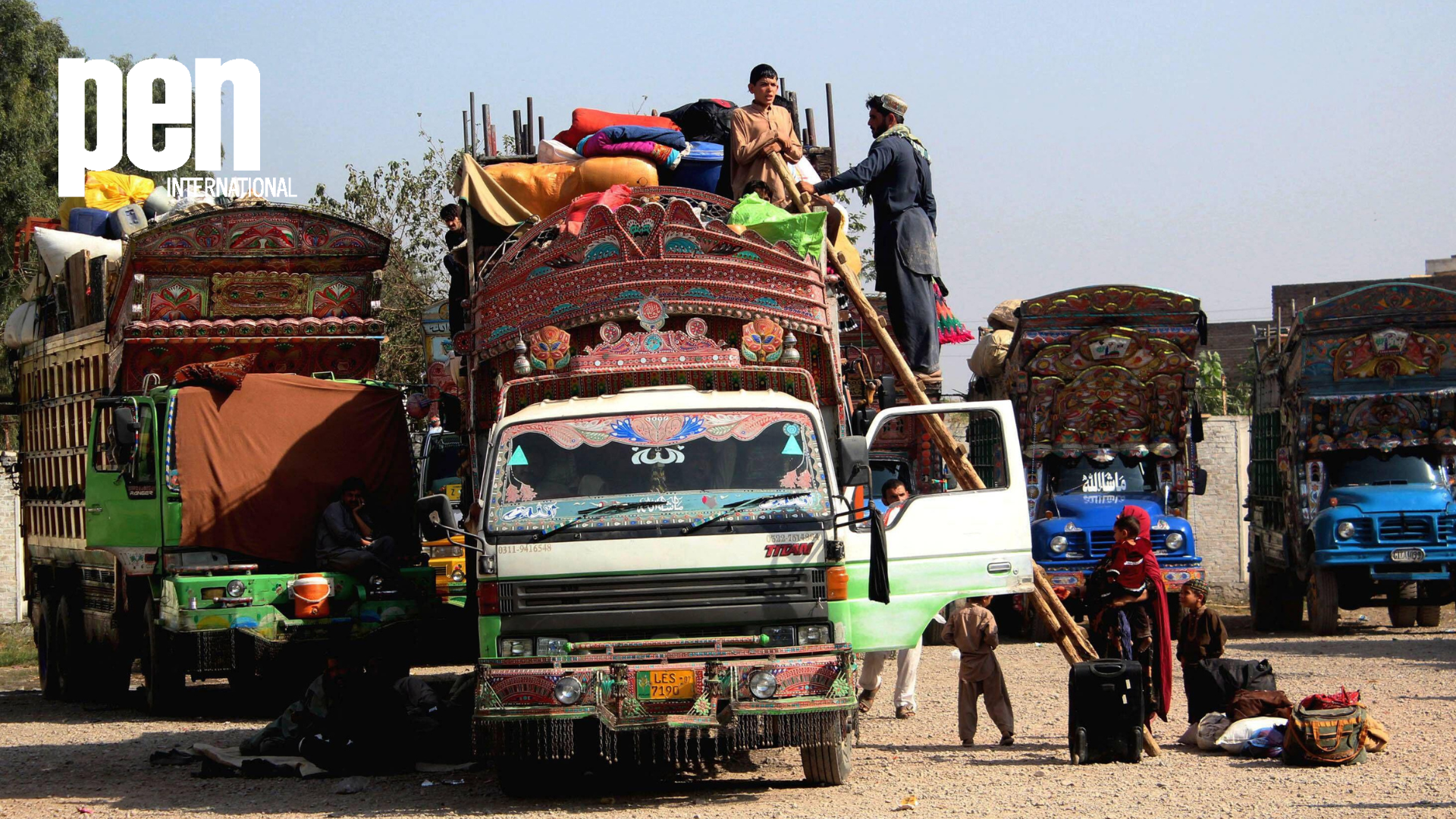
Image Credit: IMAGO/Xinhua/ Alamy
‘Writers, poets, and journalists who have fled Afghanistan have already paid a heavy price for their expression. Forcing them back now would place them in immediate danger. Normalising deportations to a country where rights are systematically denied risks exposing those fleeing persecution to serious harm. Engagement with the Taliban must not come at the cost of human lives,’ said Romana Cacchioli, Executive Director of PEN International.
5 May 2026: PEN International expresses grave concern at moves by the European Union, the United Kingdom, and the United States to pursue deportations or transfers of Afghan nationals to Afghanistan or unsafe third countries.
Reports that EU officials may host a Taliban delegation to advance cooperation on returns, that the UK is considering resuming deportations to Afghanistan, and that the United States is exploring the transfer of Afghan evacuees to the Democratic Republic of Congo signal a troubling shift away from international protection obligations. These developments risk exposing already vulnerable individuals, including many Afghan writers, poets, journalists, and human rights defenders who managed to flee persecution, to serious human rights violations in contravention of the principle of non-refoulement.
Afghanistan, under Taliban rule, is not safe. Since August 2021, the Taliban have dismantled protections for freedom of expression, targeted journalists and writers, and imposed sweeping restrictions on women and girls that amount to their effective erasure from public life. The Taliban have killed three PEN members since November 2020: Abdul Atefi, Dawa Khan Menapal, and Yama Siawash. The United Nations and leading human rights bodies have consistently found that Afghanistan is not safe for returns.
Against this backdrop, any policy that facilitates the forced return of individuals to Afghanistan, even if framed as applying only to rejected asylum seekers or those with criminal convictions, carries an unacceptable risk. Such measures set dangerous precedents that may be expanded over time, exposing individuals, including writers, journalists, and human rights defenders, to persecution. Similar deportation programmes in countries including Pakistan and Turkey have already resulted in at-risk Afghan writers and journalists being targeted for return.
Proposals to transfer Afghans to third countries are equally alarming. The United States is reportedly considering relocating Afghan evacuees to the Democratic Republic of Congo, a country where millions remain internally displaced due to ongoing conflict.
Since the Taliban’s return to power in 2021, PEN International has, together with its Centres and partners, supported the emergency relocation of more than 120 writers, poets, publishers, and their families from Afghanistan. Many were targeted for their writing and face credible threats to their lives if returned. Unfortunately, PEN International is no longer in a position to provide further relocation support.
Many others remain stranded in third countries, in legal limbo and without durable protection. Policies that shrink resettlement pathways or shift responsibility elsewhere only deepen this crisis.
PEN International therefore calls on the EU, the UK, and the US to:
Refrain from any forced returns to Afghanistan in cases where there is a real risk of persecution or serious human rights violations, in line with the principle of non-refoulement, including for writers, journalists, and poets;
Ensure that engagement with the Taliban does not enable deportations that place lives at risk;
Expand safe and durable resettlement pathways, particularly for writers, poets, journalists, and human rights defenders.
At a time when freedom of expression in Afghanistan has been all but extinguished—particularly for women—the international community must not abandon those who have risked everything to defend it. Governments must act in accordance with their legal obligations and moral responsibilities, ensuring protection for those who cannot safely return.
Note to editors:
For further details, contact Michael Altman Rosen-Lupu, Head of Asia/Pacific Region at PEN International: [email protected]
For media queries, please contact Sabrina Tucci, Head of Communications and Campaigns at PEN International: [email protected]