
Iran: Authorities must end brutal crackdown on protests and internet shutdowns
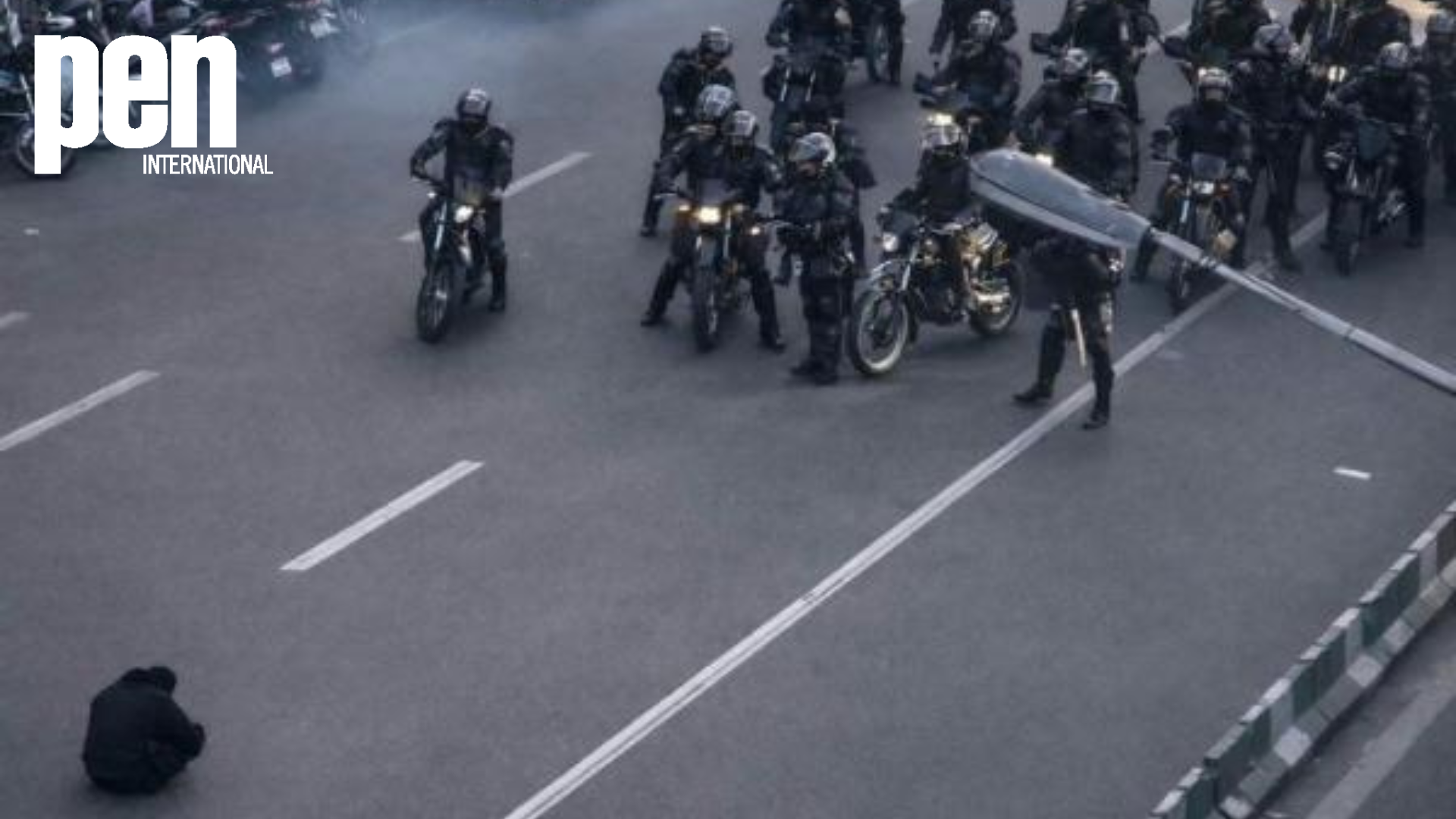
Image credit: Wikimedia Commons, Tehran, 2 January 2026
“We are horrified to see such a deadly response to people’s legitimate demands for better economic conditions. Iranian authorities have systematically stifled and repressed dissent over the years. We stand in solidarity with the Iranian people and their fundamental right to freedom of expression,” said Burhan Sonmez, President of PEN International.
16 January 2026: PEN International strongly condemns the deadly crackdown on protests across the country, including the mass arbitrary detention and the unlawful use of force against peaceful protestors, and the implementation of blanket censorship and internet blackouts across the country.
The organisation raises grave concerns over the Iranian authorities’ treatment of arbitrarily detained protestors and officials’ threats of expedited trials without due process. The rights to peaceful assembly, freedom of expression, fair trial, and access to information are inalienable rights for all Iranians and are protected under international law.
The recent crackdown came in response to widespread protests against the government's mishandling of the economy, including the collapse of the country’s local currency and persistently high inflation. The resulting erosion of living standards has been compounded by endemic corruption and the impact of unilateral sanctions, which an independent UN expert views as having an ‘overall adverse effect on the broad spectrum of human rights’, in a report published following her state visit to Iran in 2022.
On 28 December 2025, protests erupted in Iran’s Grand Bazaar in Tehran and other major commercial centres, and rapidly spread to provinces and cities across the country. As the protest movement continued over recent weeks, resulting in thousands of Iranians taking to the streets, authorities quickly moved to suppress what became the country’s largest protest movement since 2022. Human rights organisations have documented the unlawful use of force by Iranian security forces against largely peaceful protestors, including the use of firearms, teargas, and mass arbitrary arrests to suppress the protestors. According to media reports, eyewitnesses saw security forces open fire ‘into lines of protesters, and people fell where they stood’. On 8 January 2026, Iranian authorities imposed a near-total internet and communications blackout, severely restricting Iranians' ability communicate with the outside world.
The internet and communications shutdown have made it extremely challenging to access and verify information about the true scale and the extent of the ongoing crackdown. However, senior Iranian officials’ statements indicate a zero-tolerance policy for what they deemed to be ‘rioters’ and ‘foreign agents’, with Iran’s Supreme Leader Ayatollah Ali Khamenei insisting that ‘rioters must be put in their place’ – despite acknowledging the legitimacy of the protestors' demands and the need to address them. The head of Iran’s judiciary vowed to expedite trials of protestors, with mounting concerns that many could face executions for taking part in the protests.
The Iranian authorities' brutal response to the protests has resulted in scores of deaths, injuries, and mass arrests of protestors across the country. A human rights group focusing on Iran, Iran Human Rights, said the death toll could reach up to 3,500 people, according to their documentation, with the casualty figures rising exponentially since 8 January 2026. Other media sources have estimated as many as 12,000 fatalities. An online video verified by the BBC shows scores of dead bodies at a mortuary in Tehran, indicating a large number of fatalities.
In recent weeks, cities and provinces across Iran have reportedly experienced unprecedented levels of surveillance and censorship. According to media reports, Iranian authorities have deployed surveillance drones, signal jammers, and a rapid-response propaganda apparatus to coincide with the deployment of security forces in an attempt to suppress dissent.
Iranian authorities have previously imposed nationwide internet shutdowns while launching deadly crackdowns, contributing to an environment of impunity. In November 2019, Iranian authorities killed over 300 people in a deadly response to anti-government protests that erupted following a significant increase in fuel prices. During the crackdown, Iranian authorities employed a nationwide internet blackout, cutting off access to over 80 million people. Similarly, during the Women Life Freedom protests that occurred in 2022, authorities cut off the internet in parts of Tehran and Kurdistan and blocked access to platforms such as Instagram and WhatsApp, while violently repressing the protests. More recently, the authorities shut down the internet again during the 2025 war with Israel, curtailing access to information across the country.
For further information, please contact Mina Thabet, Head of the MENA Region: [email protected].
For media enquiries, please contact Sabrina Tucci, Head of Communications and Campaigns at PEN International: [email protected].