ASIA PACIFIC REGIONAL OVERVIEW 2026
Ross Holder, Head of Research, Policy and Advocacy
In several countries across the Asia/ Pacific region, including Indonesia, Malaysia, the Maldives, Mongolia, Nepal, the Philippines, and Timor Leste, 2025 was marked by protests often about corruption, inequality, and unpopular legislation or politicians. They were frequently organized by young people in the Gen Z age group using a variety of social media platforms and taking inspiration from similar protests elsewhere. They were met by an increased willingness by governments to impose sweeping and indiscriminate restrictions on online expression. As with previous years, the use of long-term prison sentences as a means to silence writers, journalists and others remains a pressing concern for the region, which has been exacerbated by appalling reports of the dire detention conditions that many have been subjected to. Transnational repression continued its global march as a tool of persecution, once again rearing its ugly head in the region this year. PEN International celebrated several releases and acquittals during the year.
Online censorship in times of protest
Over the course of 2025, concerns around online expression have been a key factor in youth-led protests that have taken place in several countries across the region, with governments frequently resorting to sweeping acts of censorship on the basis of national security and public order laws.
In Nepal, the government’s ban of 26 social media platforms sparked demonstrations by thousands of the country’s Gen Z population, which escalated into mass protests over a broader range of socio-economic grievances, including rising inequality and youth unemployment. Many viewed the government’s social media ban as an act of online censorship and an attempt to stifle viral social media posts of alleged corruption and nepotism by Nepal’s ruling political elites. Authorities responded to the protests by imposing a violent crackdown, including a military curfew and permitting the use of lethal force against unarmed protestors, resulting in 77 deaths and hundreds more injured over the course of two days of protests. During the turmoil, Nepal’s Prime Minister was forced to resign, with the social media ban reversed soon afterwards.
Youth-led Gen Z protests also took place in Indonesia in August and September, spurred by similar discontent over socio-economic inequality, resulting in 10 deaths and a temporary suspension of TikTok’s live streaming service after footage was circulated online showing the death of a 21-year-old gig economy worker who was run over by a police vehicle during the protests.
There are also ongoing concerns over the overbroad use of legislation to curb online expression in Sri Lanka following the rushed promulgation of the Online Safety Act (OSA) in February 2024. Implemented following anti-government protests in 2022 that resulted in a government crackdown and ultimately, the resignation of Sri Lanka’s then president, the OSA has been heavily criticized for its vague offences, overbroad enforcement provisions, disproportionate penalties and lack of judicial oversight. The UN’s human rights office called in August for its ‘amendment or repeal’. Despite the government reiterating its manifesto commitment to revise the OSA as recently as August 2025, along with support for its repeal from the government’s opposition, progress has been slow.
In Pakistan, protests and sit-ins by activists against the use of police violence in the conflict-affected Balochistan province led to the arrest and detention of woman human rights defender Mahrang Baloch in March 2025. Previously charged with sedition in 2024 after she returned from Norway, where she participated in events organised by WEXFO and PEN Norway, Baloch remained in prison at the time of writing.
Meanwhile in India, demonstrations in territories across the country over a wide range of concerns, including the ongoing crackdown on journalists, have been met with efforts to silence dissenting expression. In Indian-administered Jammu and Kashmir, authorities blocked some 300 social media accounts that were found to circulate content that allegedly provoked unrest, while also banning the use of VPNs as a means to bypass state censors. Indiscriminate internet shutdowns continue to be implemented across the country despite previous strong criticism from UN experts, with internet users in India reportedly facing more internet restrictions than any other country in 2025.
Long-term imprisonment as an instrument of silence
Across the region, writers and others continue to be subjected to long-term prison sentences for their peaceful expression. In Thailand, new convictions in 2025 for poet and human rights lawyer Arnon Nampha (see below), resulted in a cumulative sentence of over 29 years’ imprisonment for royal defamation (lèse-majesté) in retaliation for his peaceful expression and participation in demonstrations that called for wide-ranging reforms, including the repeal of Thailand’s lèse-majesté legislation. At the end of the year, Arnon faced four further royal defamation charges, with each carrying a potential 15-year prison sentence.
In China, imprisoned writer and journalist Dong Yuyu (see below), serving a seven-year prison sentence, had his appeal rejected by the Beijing High Court on 13 November 2025. In response to the court’s ruling, his family released a statement calling it a ‘shameless act of persecution’ that was carried out against Yuyu due to his ‘lifelong outspokenness for democracy, human rights, and political reforms in China’.
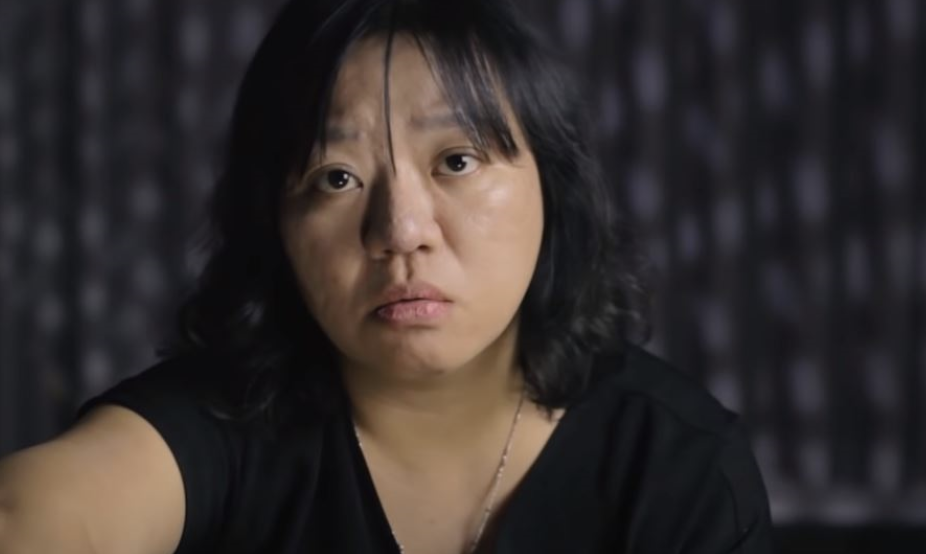
In Vietnam, 2025 marked writer and activist Pham Doan Trang’s (see below) fifth year in prison serving a nine-year sentence for ‘anti-state propaganda’, which has been widely condemned by civil society and the United Nations Working Group on Arbitrary Detention. In recognition of her dedicated writing and struggle for freedom of expression in Vietnam, Trang was awarded PEN Sweden’s 2025 Tucholsky Prize.
Unbearable conditions of detention
All too often, imprisoned writers are subjected to appalling prison conditions, compounding the injustice of their incarceration. In Myanmar, imprisoned writer and activist Wai Moe Naing, currently serving a combined sentence of 74 years in prison, was reportedly assaulted by prison officials in June 2025. Despite suffering from a fractured wrist and other serious injuries, he was denied adequate medical care and at the end of the year was held in solitary confinement, which caused further health problems.
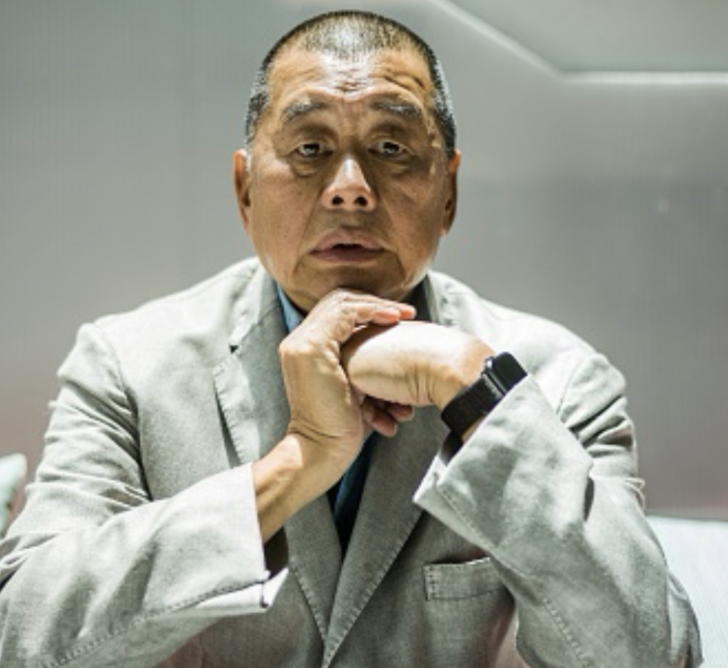
In Hong Kong, there were increasing concerns over the health and wellbeing of writer and media publisher Jimmy Lai. Aged 78, Lai had been continuously held in solitary confinement for over five years at the end of 2025, with his health rapidly deteriorating over the course of his long-running national security trial. Throughout the year, PEN International has continued to amplified the voices of Jimmy Lai’s son Sebastien and representatives of his international legal team by facilitating their attendance at UN meetings where they drew attention to Lai’s arbitrary detention and urged UN member states to do more to secure his release.
Elsewhere in China, there are also mounting concerns for the well-being of imprisoned writer and activist, Yang Hengjun (see below), who continued to serve a suspended death sentence. In early 2025, reports emerged of the impact that his worsening health has had on his ability to engage in prison labour, preventing him from being able to purchase basic amenities through the prison system, including toothpaste and winter gloves, which has forced him to resort to wearing socks on his hands. A letter penned by Yang was made public in May 2025, providing a powerful expression of his resolve despite the appalling conditions he had been subjected to. In the letter, Yang provides a deeply moving account of the ‘hardest and darkest chapter of his life’, and his hope that he can be returned to Australia where he can be reunited with his family and receive medical care.
Aid cuts a calamity for exile media and writers fleeing persecution
In January, the US government’s decision to freeze foreign aid, along with a subsequent decision in March to slash funding to news services including Voice of America and Radio Free Asia, had a calamitous impact on media outlets operating in exile (exile media) and hundreds of at-risk journalists, writers and others. This damage was exacerbated by similar aid cuts from several other countries, including Canada, France, Germany, and the United Kingdom.
In Myanmar, exile media outlets that were established along the Thai-Myanmar border in the wake of the 2021 coup have served as a vital source of independent news reporting on a country gripped by civil war and brutal military rule. The funding cuts have had a devastating impact on many of these media outlets, resulting in the suspension of salaries for dozens of at-risk Myanmar media workers who now face the risk of deportation to Myanmar if they cannot afford the renewal costs for their Thai visas.
Meanwhile, in Afghanistan, USAID cuts have compounded the country’s humanitarian and human rights crises, which have disproportionately impacted Afghan women and girls, who face overwhelming restrictions on their ability to engage in any form of expression, by shutting down one of their last remaining avenues to access education or healthcare through women-led, community-based programmes that were funded by humanitarian aid programmes. Cuts to international aid have coincided with the suspension or tightening of humanitarian visa programmes that were a vital lifeline for Afghan writers, journalists and others at risk of persecution from the Taliban for their peaceful expression. In Pakistan, the government’s mass deportation regime has been a source of grave concern for many at-risk Afghan writers, journalists and others who fled to Pakistan in search of safety and stability due to their public criticism of the Taliban.
Stifling campaigns of misogynistic harassment and intimidation
In several countries across the region, targeted campaigns of harassment and intimidation, both online and offline, have continued to be used as a means to silence writers and others engaged in public expression, which disproportionately impact women and girls.
In Bangladesh, writer Nadira Yeasmin (see below) has faced a sustained campaign of harassment from conservative groups after she criticised a conservative rally that sought the dissolution of a Commission that was established to advance women’s rights and gender equality. In Afghanistan, the Taliban’s campaign to erase women from public life through what amounts to gender apartheid has continued unabated, including a decree issued in August demanding the removal of books authored by women from the country’s university system. In India, journalist and writer Rana Ayyub (see below) has continued to face ongoing harassment and intimidation after her personal details were deliberately leaked online last year, resulting in her being stalked and threatened with rape and murder.
Alarming rise in the use of transnational repression
This year has seen a significant rise in transnational repression in countries across the region, resulting in UN independent experts submitting parallel communications to the governments of China, and several countries in south-east Asia, detailing dozens of instances where dissidents, members of marginalised communities and family members have been subjected to transnational human rights violations, including acts of intimidation, assaults, enforced disappearance and murder.
In Vietnam, Tibetan writer, educator and religious leader Humkar Dorje Rinpoche (see below) died under suspicious circumstances while in custody in March 2025, just days after he was reportedly arrested by Vietnamese authorities in the presence of Chinese officials. Several months previously, Humkar Dorje Rinpoche had reportedly fled to Vietnam after being interrogated by Chinese authorities.
While in Thailand, Australian writer and journalist Murray Hunter (see below) was indicted on four counts of criminal defamation proceedings following police complaints lodged by a state regulator in Malaysia over several of his self-published articles concerning the regulator’s past conduct. The transnational pursuit of criminal defamation charges against Hunter over his public interest commentary poses an alarming precedent for the region.
Journalists face lethal consequences for their reporting
Over the course of 2025, media NGOs have reported that at least 10 journalists have been killed in the Asia/ Pacific region. While the region’s death toll pales in comparison to those killed during the ongoing genocide in Gaza or the appalling conflicts in Yemen and Ukraine, many of the killings have occurred in countries at times of nominal peace, where journalists have been murdered for their reporting on issues ranging from corruption to local politics, with those responsible all too often escaping legal consequences. In Bangladesh, a journalist was brutally killed by machete-wielding attackers in apparent retaliation for his investigative journalism. Meanwhile, in the Philippines, three journalists were shot dead in a series of seemingly unrelated targeted killings, with just one suspected assailant arrested at the time of writing.
Good news
PEN International welcomed positive developments in the region, including the acquittal of writer and activist Amanda Echanis (see below) in December, over five years after she was detained on a spurious charge of ‘illegal possession of firearms and explosives’, which is frequently deployed against journalists, writers and others in the Philippines who have been ‘red-tagged’, or accused of being communist sympathisers. In August, the long-running case against photojournalist, writer and activist Shahidul Alam (see below) was dismissed by the High Court of Bangladesh, over seven years after he was initially detained for allegedly violating a law that was repealed in 2018. Elsewhere, in India, academic and activist Hany Babu (see below) was granted bail by Bombay’s High Court in December after having spent over five years in prison without trial. Babu joins a growing number of the 16 writers, poets and activists, referred to collectively as the BK 16, who have been released on bail but remained subject to restrictions on their movement and expression at the end of the year.