
Argentina: Conviction in Rodolfo Walsh case proves that crimes against writers cannot be erased by time
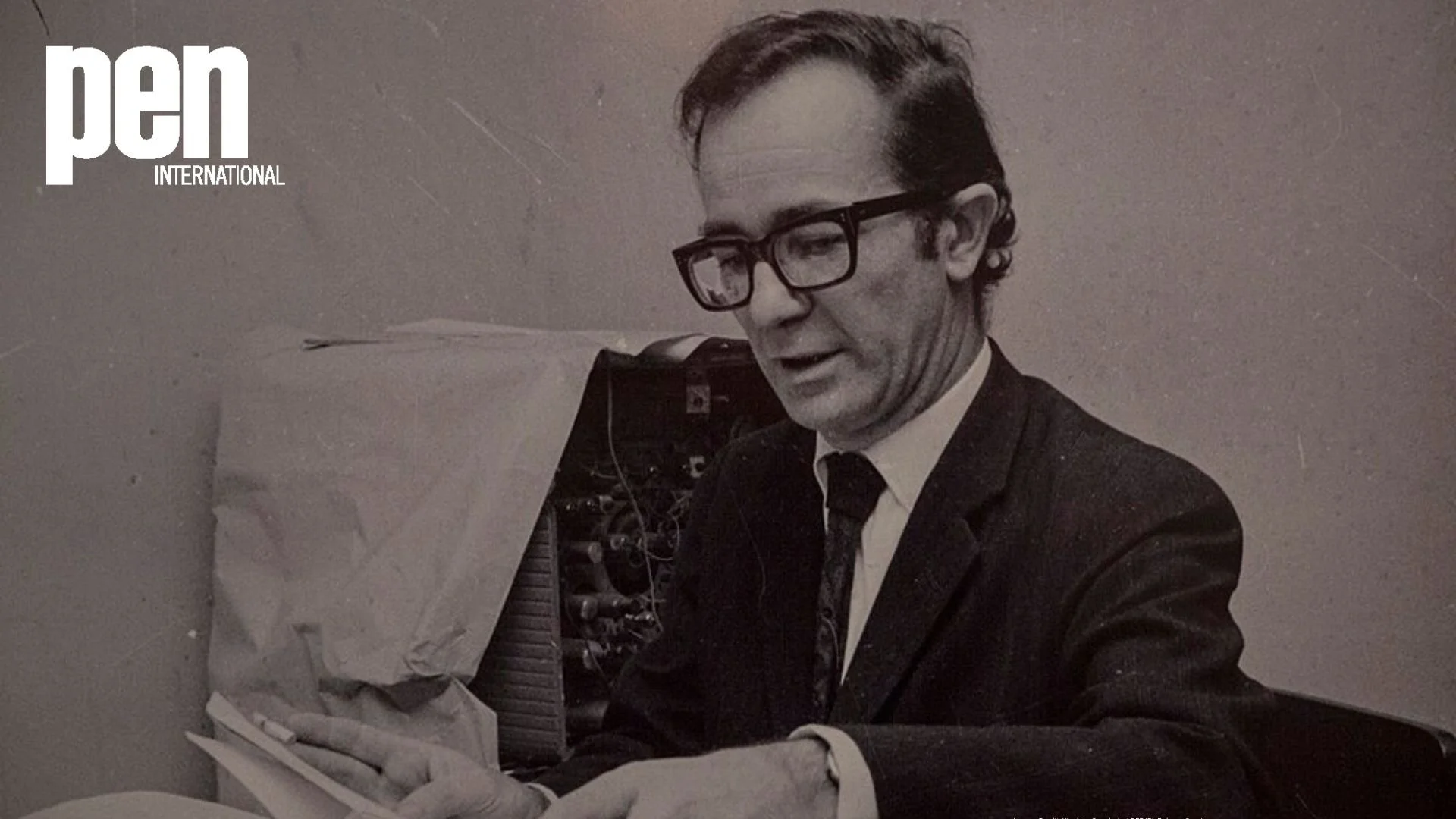
Image Credit: Ministerio de Cultura de la Nación/ Wikkicommons
‘When the truth is recognised and those responsible are held to account, even decades later, it sends a vital message to writers and journalists facing persecution today: justice may be delayed, but it cannot be denied forever’, said Burhan Somnez, President of PEN International.
‘Rodolfo Walsh transformed journalism into an act of courage. This conviction honours his enduring legacy and Argentina’s long struggle for memory, truth and justice’, said Gabriel Seisdedos, President of PEN Argentina.
4 September 2026: PEN International welcomes the conviction of former Argentine Naval Prefecture intelligence officer Gonzalo ‘Chispa’ Sánchez for his role in the abduction of renowned Argentine writer and investigative journalist Rodolfo Walsh, alongside 177 other victims of Argentina’s last military junta.
Walsh was intercepted without a warrant by members of the Argentine Navy’s Task Force on 25 March 1977, while walking in Buenos Aires. According to reports, Walsh was shot during the ambush and taken to the Navy Mechanics School (ESMA), a notorious detention centre, and his body was never seen again. The attack took place one day after Walsh circulated his landmark Open Letter from a Writer to the Military Junta, in which he denounced censorship, the persecution of intellectuals, enforced disappearances, torture, killings and the devastating economic policies imposed by the military regime.
Walsh’s journalistic work documenting state violence placed him among those targeted by the junta’s systematic campaign of repression. He had already transformed investigative journalism in Argentina throughhis book, Operación Masacre, first published in 1957, which exposed the clandestine and illegal execution of civilians by the military junta.
On 26 August 2026, the Federal Oral Criminal Court No. 5 of Buenos Aires unanimously sentenced Gonzalo Sánchez to 16 years and eight months in prison and imposed absolute disqualification from public office. The Court found him to be a co-perpetrator of 178 counts of aggravated unlawful deprivation of liberty, including Walsh’s abduction, and recognised the acts examined during the trial as crimes against humanity. Sánchez, a former intelligence officer and member of the ESMA task force, a unit responsible for kidnapping, torture and murder operations, remained a fugitive for 15 years. He was located and arrested in Brazil and extradited to Argentina in 2020.
The conviction also comes shortly after another landmark decision connected to Walsh’s journalistic legacy. On 22 June 2026, following a ‘truth trial’, Federal Judge Alicia Vence declared that the 1956 José León Suárez executions documented in Walsh’s book Operación Masacre constituted crimes against humanity.
PEN’s advocacy for Walsh began while Argentina’s military junta was still in power. In 1976, Mario Vargas Llosa, then President of PEN International (1976 –1979), sent a letter to Jorge Rafael Videla, then President of Argentina, urging him to stop the persecution of writers and safeguard the lives of Argentina’s citizens. Three years later, in July 1979, PEN America presented the cases of Rodolfo Walsh and journalist Jacobo Timerman at PEN International’s 44th Congress in Rio de Janeiro, Brazil. The following year, on 2 October 1980, the French PEN Club, working with Amnesty International France, organised an event on imprisoned and persecuted writers and publicly identified Walsh and fellow Argentine writer Haroldo Conti as being among the writers forcibly disappeared under the junta rule.
These interventions form part of PEN’s longstanding commitment to ensuring that attacks against writers and journalists are documented and not forgotten, even when immediate justice is denied.
PEN International welcomes the progress made by the Argentine justice system and urges the authorities to ensure the effective implementation of these judgments and their reparative measures; to continue investigating Walsh’s fate and the location of his remains; to preserve and make available all relevant state archives; and to pursue every remaining avenue of accountability for crimes committed against writers, journalists and other victims of state repression.
Note to Editors
For more information, please contact Alicia Quiñones, Head of the Americas Region, PEN International: [email protected]
For media queries, please contact Sabrina Tucci, Head of Communications and Campaigns, PEN International: [email protected]