
Argentina: Escalating attacks and restrictions against the press signals deepening crisis for freedom of expression
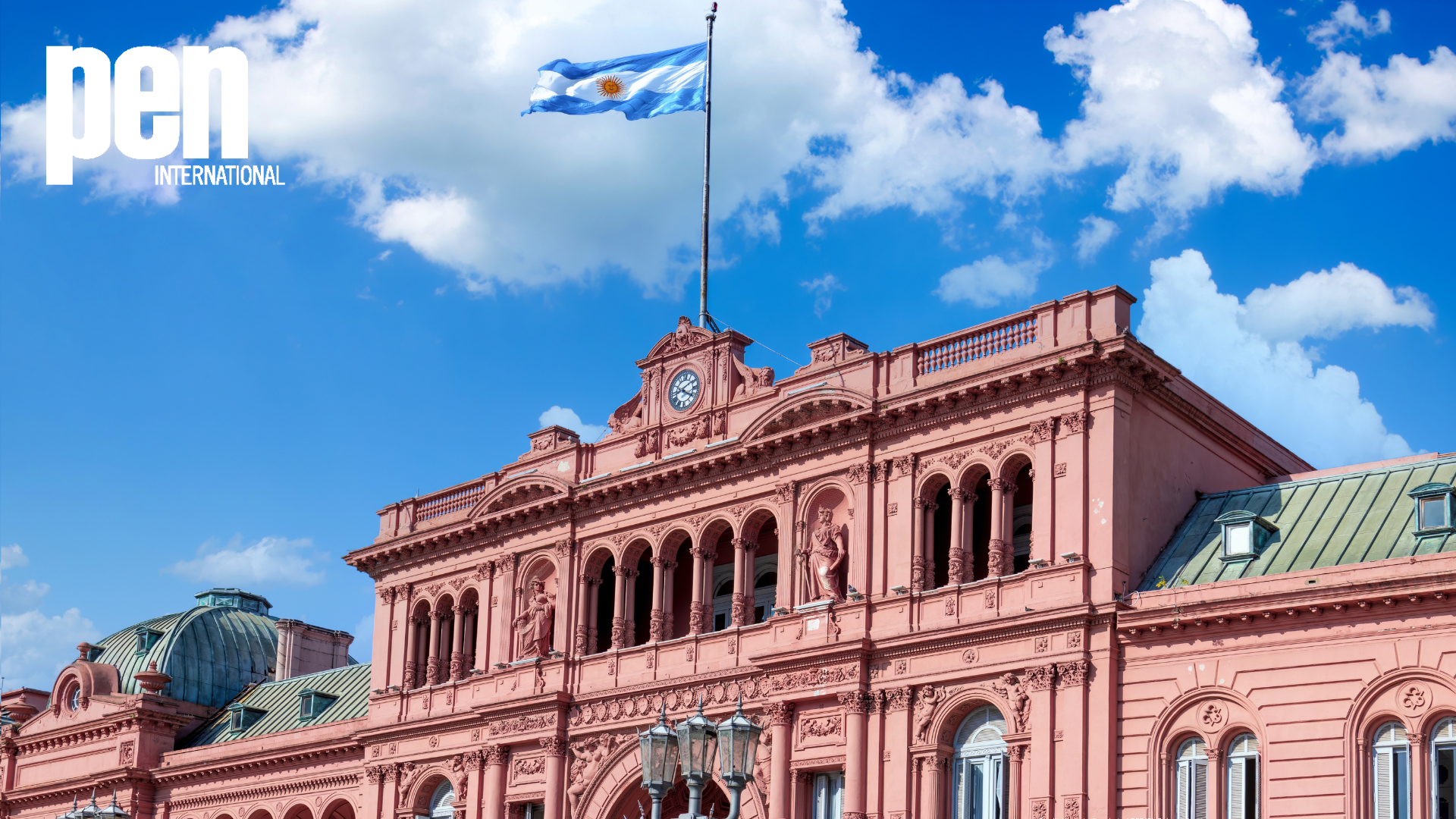
Image Credit: eskystudio/Shutterstock
‘Freedom of expression cannot flourish in a context where journalists, writers and other cultural actors are systematically stigmatised, excluded from public spaces, or portrayed as enemies of the official narrative. Public officials have a responsibility to foster an environment in which the press can carry out its work freely, independently, and safely,’ said Burhan Sonmez, President of PEN International.
23 July 2026 - PEN International expresses its deep concern over the growing pattern of stigmatisation, restrictions, and hostility directed against journalists and independent media outlets in what has become a persistent pattern since the beginning of Javier Milei’s administration, and which has escalated in recent months.
Recent measures adopted by the Argentine authorities, together with repeated attacks from the highest levels of government, undermine the essential role of a free press in a democratic society and contribute to a climate of intimidation and self-censorship. In April 2026, the National Executive Branch barred a group of journalists from entering the Casa Rosada, alleging that the media outlets they worked for had participated in a purported ‘Russian disinformation campaign’ aimed at discrediting the Argentine government, an allegation that has not been publicly substantiated.
Shortly afterwards, Argentine authorities ordered the closure of the Casa Rosada press room between 23 April and 4 May 2026. Although access was subsequently restored, various restrictions continue to hinder the work of accredited journalists.
These measures have been accompanied by an escalation in stigmatising rhetoric against journalists and media outlets by President Javier Milei. According to La Nación newspaper, during the Easter weekend, President Milei dedicated most of his activity on the social media platform X to attacking columnists, reporters, and media organisations, accusing them of forming a purported ‘criminal association’ against him.
He also launched personal attacks against specific journalists, publicly disparaged several national media outlets, and shared an artificial intelligence-generated image depicting the ‘death of journalism’. Following the presentation of the government’s management report before Congress on 30 April 2026, the President once again publicly referred to the journalists as ‘filthy scum’, further intensifying hostile rhetoric against the press.
In PEN International’s Case List 2025-2026, “Writers Under Siege: Defying Silence” Argentina shows a concerning increase in cases of legal harassment against writers and journalists, as well as an alarming escalation of attacks against media outlets. This deterioration is consistent with trends documented by regional organisations. According to the 2025 report by the Voces del Sur Network (Red VDS), represented in Argentina by the Argentine Journalism Forum (FOPEA), Argentina recorded the highest number of stigmatising statements against the press in the region.
PEN International urges the Argentine authorities to refrain from using rhetoric or adopting measures that may foster hostility, intimidation, or violence against journalists. The exclusion of media professionals from public institutions, restrictions on access to official information, and the systematic stigmatisation of the press are incompatible with Argentina’s domestic and international obligations under Article 19 of the International Covenant on Civil and Political Rights and Article 13 of the American Convention on Human Rights.
Note to Editors
For more information, please contact Alicia Quiñones, Head of the Americas Region, PEN International: [email protected]
For media queries, please contact Sabrina Tucci, Head of Communications and Campaigns, PEN International: [email protected]