
Cuba: Henry Constantín’s 19th detention highlights escalating crackdown on independent journalism
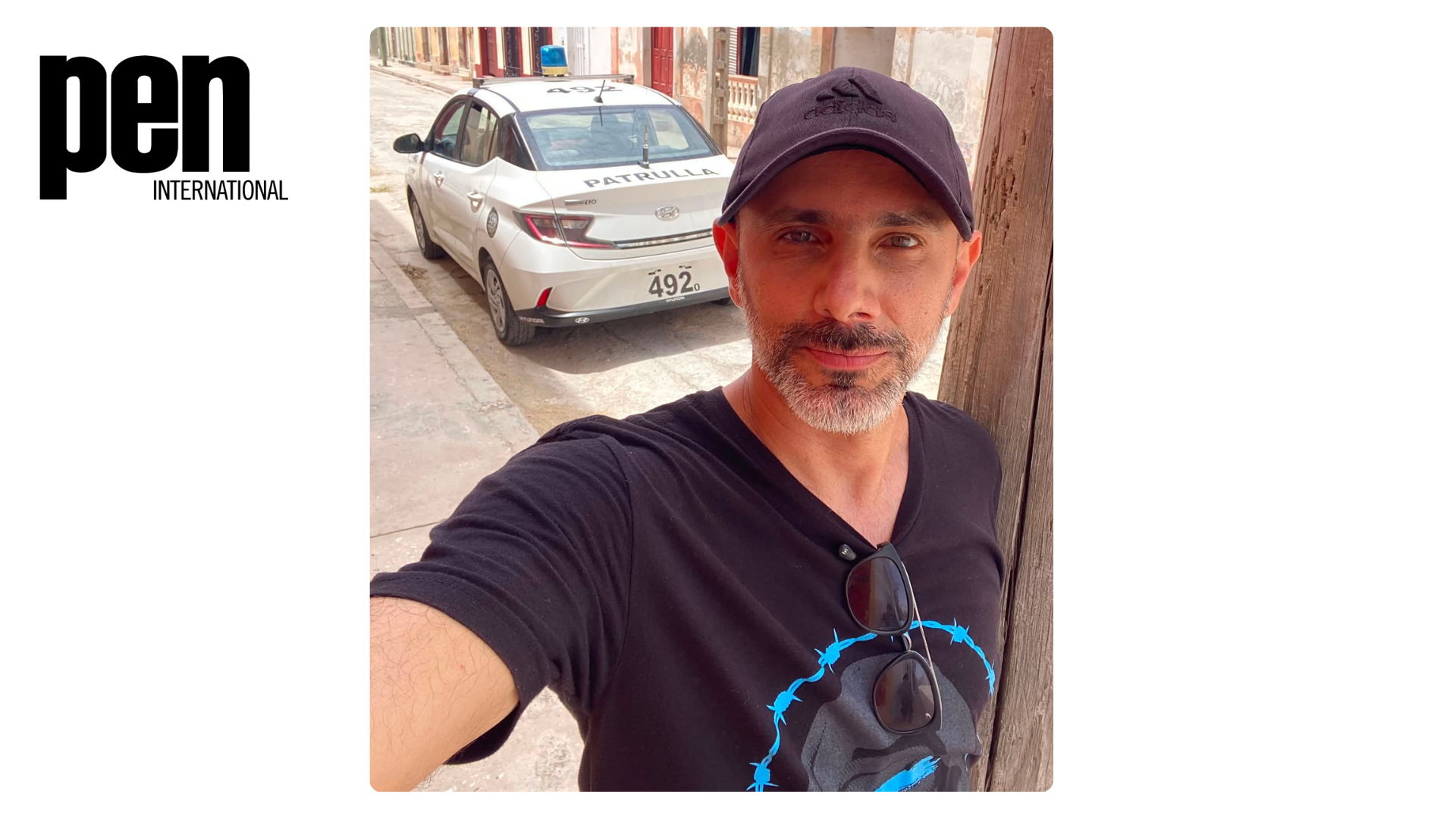
Image Credit: Henry Constantin
“The imprisonment of Henry Constantín reflects the persistent persecution of those practising independent journalism in Cuba. Reporting on living conditions, documenting abuses and giving citizens a voice are essential activities that no authority should punish. We demand his immediate release,” said Burhan Sonmez, President of PEN International.
07 October 2026: The detention and imprisonment of critical voices in Cuba continue unabated, as the authorities seek to silence those who criticise the government, report independently or engage in peaceful protest. PEN International condemns the detention of Henry Constantín Ferreiro, founder and director of print and online media outlet La Hora de Cuba, yet another example of the censorship and restrictions imposed on independent journalism in the country. His imprisonment forms part of a clear and broader pattern of intimidation targeted at journalists, writers, and artists for their criticism of the authorities, unduly restricting the exercise of freedom of expression.
Constantín has been detained since 16 September 2026, when the police issued a verbal summons to attend a National Police station in his hometown Camagüey city. On arrival the police detained him for alleged “disobedience” on grounds that he had previously failed to attend a summons issued on 9 September. Constantin however has continued to attest (as subsequently stated in his social media post), that he did indeed attend.
He was transferred on 24 September to the maximum-security Kilo 7 prison in Camagüey, where he remains in pre-trial detention. Constantín faces obstacles in the exercise of his right to due process, including delays in accessing the case file and the lack of a written notification detailing the order which imposes pre-trial detention. The Provincial People’s Court of Camagüey did not admit his habeas corpus petition, and his scheduled hearing has not taken place.
According to Reporters Without Borders, this detention marks Henry Constantín’s 19th and is clearly linked to his reporting. He was also arrested while covering the demonstrations of 11 July 2021 in Camagüey and has faced subsequent detentions while attempting to report on judicial proceedings or after interviewing relatives of imprisoned dissidents who had been participating in these protests.
Constantín has also been detained while attempting to report on the trials of activists. In June 2025, he was held for four days over an allegation of “contempt” linked to a post published on La Hora de Cuba’s Facebook page on 15 May, which denounced the conduct of a State Security agent.
“Henry Constantín is imprisoned for doing what no government should punish: reporting and expressing himself freely. His detention reflects the reality faced by independent Cuban writers and journalists, for whom exercising freedom of expression means living under the threat of losing their own liberty,” said Daniel I. Pedreira, President of the Cuban Writers in Exile PEN Centre.
Henry Constantín Ferreiro, born in Camagüey in 1984, is a journalist, writer and photographer. He founded La Hora de Cuba in 2013 as an independent print magazine, which later became a digital outlet. Based in Camagüey, the outlet commonly reports on detentions, judicial proceedings, violations of freedom of expression, the economic crisis and shortcomings in public services. In 2026, La Hora de Cuba received the Civil Rights Defender of the Year award. Constantín was unable to travel to Stockholm to receive it because of a travel ban on leaving Cuba imposed on him by the state in 2019. He writes for several publications, including occasional contributions to Árbol Invertido. He is vice president for Cuba of the IAPA's Freedom of the Press and Information Committee.
PEN International urgently calls on the Cuban authorities to immediately and unconditionally release Henry Constantín Ferreiro and end the use of criminal proceedings to punish his journalistic work. While he remains detained, they must guarantee his physical and psychological integrity, access to medical care, regular communication with his family, and the effective exercise of his rights to a defence and to challenge his detention.
Note to Editors
For more information, please contact Alicia Quiñones, Head of the Americas Region, PEN International: [email protected]
For media queries, please contact Sabrina Tucci, Head of Communications and Campaigns, PEN International: [email protected]