
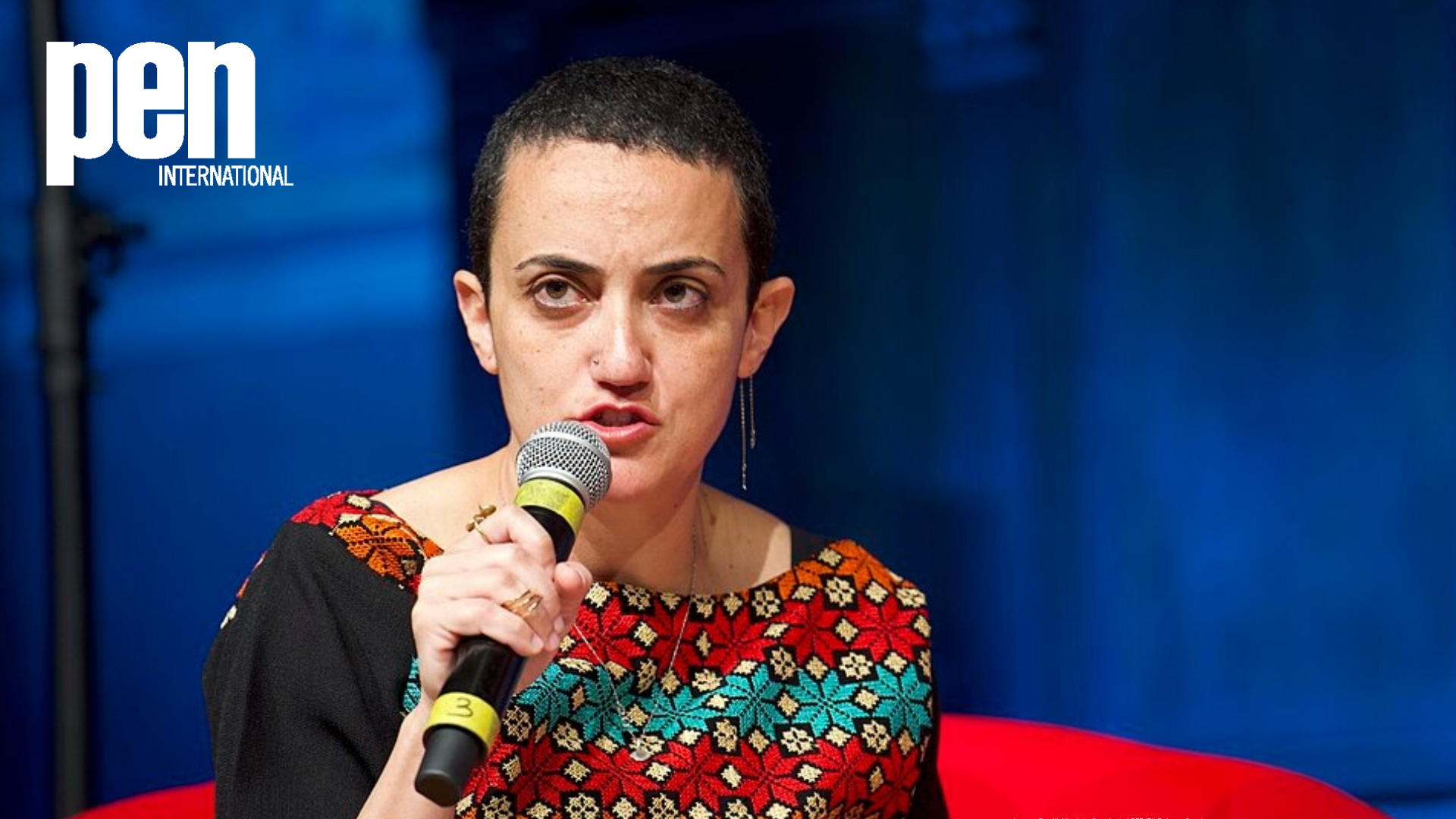
‘Once again, Egyptian authorities are trying to silence and punish independent and courageous journalists for doing their job. Egyptian authorities should be ashamed of their repeated attacks on Mada Masr and must end all bids to shut down scrutiny of their decisions and actions. We stand in solidarity with Mada Masr’s journalists and with Egyptians right to access information and hold their government accountable’, said Burhan Sonmez, President of PEN International.
28 October 2026 - PEN International strongly condemns yesterday’s verdict ordering the immediate closure of independent news platform Mada Masr; The seizure of its property, and the fine of EGP 3 million alongside the one-year prison sentence against its Editor-in-Chief, Lina Attalah, in absentia is a stark reminder of the authorities’ relentless efforts to ultimately crush press freedom in Egypt. Corroborated reports -- which detail gross violations of fair trial procedures on an already expedited case -- signal our continuing concerns about the judiciary's impartiality and independence.
PEN International calls for the convictions against Lina Attalah to be quashed, all charges to be dropped and for an end to the crackdown on press freedom and intimidation of journalists in Egypt.
On 27 October, the New Cairo Misdemeanour Court convicted prominent Egyptian journalist Lina Attalah, Editor-in-Chief of the independent news service Mada Masr, of “managing a website without a license” following a sham trial. The court applied a maximum penalty of EGP 3 million and ordered the closure of Mada Masr and the confiscation of its property, including all office equipment. According to Mada Masr, security immediately arrested Attalah from the courtroom following the conviction, and her whereabouts were unknown for more than seven hours. During the course of her release, Atttalah was shocked to learn she had been sentenced in absentia to one year in prison on charges of ‘disseminating false news’ and ‘managing a website without a license,’ in a 2024 conviction. Her legal team has appealed the absentia conviction, and a trial date has been set for November 2026.
Mada Masr also reports a disturbing litany of fair trial violations during Attalah‘s trial. This includes the court’s decision to deny Attalah’s legal team adequate time to prepare their defence and the rejection of all their procedural requests (including requests to bring in any documentation or hear any witnesses). These violations were compounded by the Court abruptly imposing new legal counsel to represent Attalah without her consent and whilst in the presence of her full defence team. The Court moreover refused to record the objections expressed by Attalah’s legal counsel as well as Attalah’s refusal whilst in court, to be represented by the court-appointed lawyer in the session minutes.
The expedited trial and the harsh and unjust ruling by a court that ignored fundamental rights guaranteed by the Egyptian Constitution and international law to all defendants before the judiciary are all resoundingly familiar. They are symbolic of the country’s protracted human rights crisis and an urgent reminder of the need to address mounting violations.
On October 21, the Supreme State Security Prosecution (SSSP) questioned Attalah about Mada Masr’s coverage of a recent wave of protests that has swept through several prisons over the last few months, highlighting the prolonged pre-trial detention of thousands of detainees and the legal status of the platform’s license. The following day, Mada Masr reported Attalah’s expedited referral to trial on charges of ‘establishing and managing an unlicensed website,’ with the first hearing set on October 27.
The attack on Mada Masr takes place only a few weeks after security arrested the entire newsroom of the independent fact-checking platform Matsada2sh. Its journalists have all reported allegations of torture by National Security officials whilst in custody to extract false confessions.
Mada Masr is one of the few remaining independent media outlets not controlled or influenced by Egyptian security agencies. Since its establishment in 2013, Mada Masr’s journalists have offered readers high-quality journalism, including news and investigative reports on politics, human rights abuses, and corruption.
PEN International has documented several attacks and intimidation against Mada Masr and its journalists because of their work. In November 2019, Mada Masr’s office in Cairo was raided by security agents who detained three senior journalists for hours a few days following a story about President Al-Sisi’s son. In May 2020, Lina Attalah, was arrested and detained for several hours while interviewing Laila Soueif, the mother of then imprisoned British-Egyptian writer Alaa Abdel Fattah.
In August 2022, Egyptian prosecutors summoned Attalah, and journalists Rana Mamdouh, Sara Seif Eddin and Beesan Kassab for interrogation over their reporting, which revealed plans to sack several senior officials in the pro-government Nation’s Future Party due to their alleged involvement in instances of corruption. In February 2024, Attalah was released on bail after she was questioned on charges of ‘publishing false news’ and ‘managing a website without a licence’ in retaliation for Mada Masr’s investigation into a corruption scandal and reporting on Israel’s offensive in Gaza. Mada Masr has also repeatedly applied for a licence with the proper authorities, with the latest applications pending a response since 2023.
Background
Since President Al-Sisi took power in 2014, space for independent and free media has significantly shrunk. Egyptian authorities have utilised a series of draconian laws, including the notorious 2015 Counter-Terrorism Law, the Law No. 180 of 2018 Regulating the Press, Media, and the Supreme Council for Media Regulation (SCMR), and repressive tactics, to erode freedom of expression and impose suffocating restrictions on media outlets and critical voices.
Al-Sisi has aggressively consolidated his grip on traditional media outlets by redesigning the legislative framework governing the media and redrawing the ownership map of private media outlets, with most of Egypt’s traditional media outlets having become controlled or heavily influenced by security agencies. In January 2017, a former military intelligence officer and former army spokesperson announced that his company had officially taken over the Al-Assema private media network. Also in 2017, the DMC TV network, widely known to be controlled by the military, started broadcasting and established itself as a major player in the Arab media landscape. In September 2017, a subsidiary of the Falcon Group, an Egyptian security agency with high-ranking government officials, purchased the private al-Hayat network.
Note to editors:
• For more information, please contact Mina Thabet, Head of the MENA Region, email: [email protected]
• For media interviews or queries, please contact Sabrina Tucci, Head of Communications and Campaigns of PEN International, [email protected]