
Mexico: PEN International alarmed by escalating attacks on journalists and critical voices
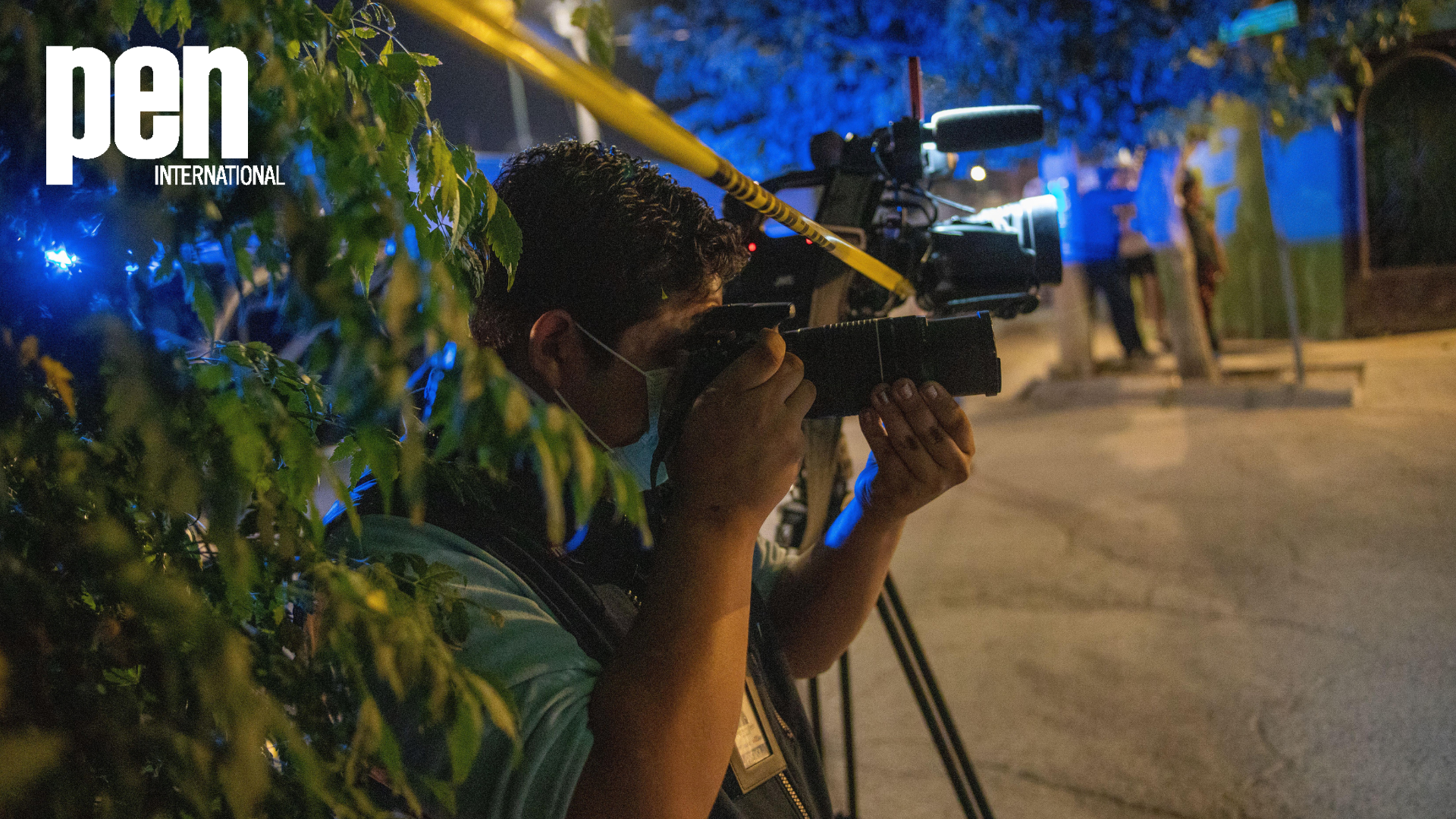
Image Credit: David Peinado
‘Mexico is experiencing a worrying moment for freedom of expression. Attacks against journalists, smear campaigns, threats, and the use of legal mechanisms to restrict reporting create a chilling effect that affects society. Authorities have a responsibility to ensure a safe environment for the practice of journalism’, said Burhan Sonmez, President of PEN International.
Update: 10 July 2026: On 3 July 2026, the Veracruz State Prosecutor’s Office confirmed, through forensic and identification tests, that human remains found in southern Veracruz, belonged to journalist Roxana Berenice Guzmán Ramírez, director of the news outlet Pulso Informativo del Sureste. Guzmán had been abducted by armed men from her home on 2 June 2026. According to the Prosecutor’s Office investigation, eight people were arrested for their alleged involvement in the crime, including four municipal police officers, accused of collaborating with the criminal group responsible for her abduction and murder. PEN International deeply mourns the killing of Roxana Guzmán and reiterates its call on the Mexican authorities to guarantee a prompt, thorough and impartial investigation to fully clarify the facts, and to ensure that her journalistic work is considered as a line of investigation.
11 June 2026: PEN International expresses concern over the increase in violence, attacks, judicial harassment, stigmatisation, and criminalisation of journalists in Mexico in recent weeks. These incidents, which take place at a time when Mexico is set to jointly host the Fifa World Cup, are representative of a significant deterioration of the country’s conditions for the exercise of freedom of expression and press freedom, and of the safety of those who investigate, report, and participate in public debate.
On 21 May 2026, journalists were among several detained in the state of San Luis Potosí under recently amended legislation relating to the use of artificial intelligence and digital content, which has been heavily criticised for its overly broad and ambiguous language. While the release of those detained under these provisions was announced on 6 June 2026, their arrest sets a dangerous precedent for the criminalisation of journalism.
Also in May, the Mexican government announced the expansion of ‘Detector de Mentiras’ (Lie Detector) from a segment of Mexican President Claudia Sheinbaum’s daily press conference, into a dedicated television programme designed to publicly identify information about the government published by media outlets and on social media platforms that the government considers to be ’fake news’.
In the same month, President Claudia Sheinbaum made statements against the media conglomerate TV Azteca, accusing the network of spreading false information and urging the public not to consume its content. While criticism of the media forms part of public debate, public officials must refrain from using rhetoric that may contribute to the stigmatisation of journalists and media outlets. Freedom of expression organisations have warned against turning official press conferences or the Lie Detector program into media ‘tribunals’ targeting reporters and independent news outlets, as such practices can fuel stigmatising narratives, deepen public hostility towards the press, and undermine conditions for the free and safe exercise of journalism.
On 28 May, a constitutional reform concerning so-called ‘foreign interference’ in electoral processes was debated and approved. The reform allows for the annulment of elections on grounds where it has been proven that the electoral results have been influenced by acts of foreign interference. Various sectors have expressed concern about the breadth of the amendment and the potential impact that certain interpretations may have on civil society organisations, international bodies, and others participating in public debate, including journalistic reporting on domestic issues carried out by international media outlets.
The organisation is also deeply concerned about the abduction of journalist Roxana Berenice Guzmán Ramírez, director of the news outlet Pulso Informativo del Sureste, in Nanchital, Veracruz, on 2 June 2026. According to public reports, armed men forcibly entered her home and abducted her in front of her family. At the time of publication, the journalist remains missing. PEN International joins national and international organisations in calling for an urgent, transparent, and effective investigation, as well as immediate measures to locate and protect the journalist and her family.
On 24 May, columnist and journalist Juan Manuel Partida Valdez, president of the Association of Journalists of Sinaloa, was targeted with death threats against his family, following his publication of a social media post raising concerns over a lack of transparency by public officials. In the same state, on 3 June, journalist América Armenta reported threats related to her journalistic work. A Facebook page circulated false accusations seeking to link her to criminal groups, a particularly dangerous practice in contexts marked by organised crime-related violence.
Meanwhile, on 6 June, it became public that journalist Adela Navarro Bello, editor-in-chief of the weekly newspaper Zeta, was subjected to stigmatising rhetoric aimed at discrediting her work while covering a violent incident in northern Mexico that claimed the lives of twelve people. This places her in a situation of heightened vulnerability and risk, as documented by ARTICLE 19, which shows that many physical attacks against journalists are preceded by online violence.
In its 2026 Case List, PEN International documented a rise in legal actions against writers and journalists as a means of silencing critical expression. The freedom of expression environment in Mexico is facing a convergence of direct threats and the misuse of judicial mechanisms, including administrative sanctioning procedures, defamation complaints, allegations of gender-based political violence, and civil and criminal litigation aimed at preventing the publication of journalistic investigations.
The above information and incidents, which have taken place in little more than a month of public debate in Mexico, reveal deeply concerning trends affecting freedom of expression and civic space.
PEN International calls on the Mexican authorities to immediately cease the misuse of criminal, civil, and administrative mechanisms to intimidate journalists, authors, and critical voices; guarantee the safety and protection of journalists at risk; and ensure that any measures aimed at addressing disinformation do not restrict legitimate journalistic activity or public debate.
Note to Editors
For more information, please contact: Alicia Quiñones, Head of the Americas Region, PEN International: [email protected]
For media queries, please contact: Sabrina Tucci, Head of Communications and Campaigns, PEN International: [email protected]