
Russian Federation: Drop spurious extremism case against Circassian writer Larisa Tuptsokova
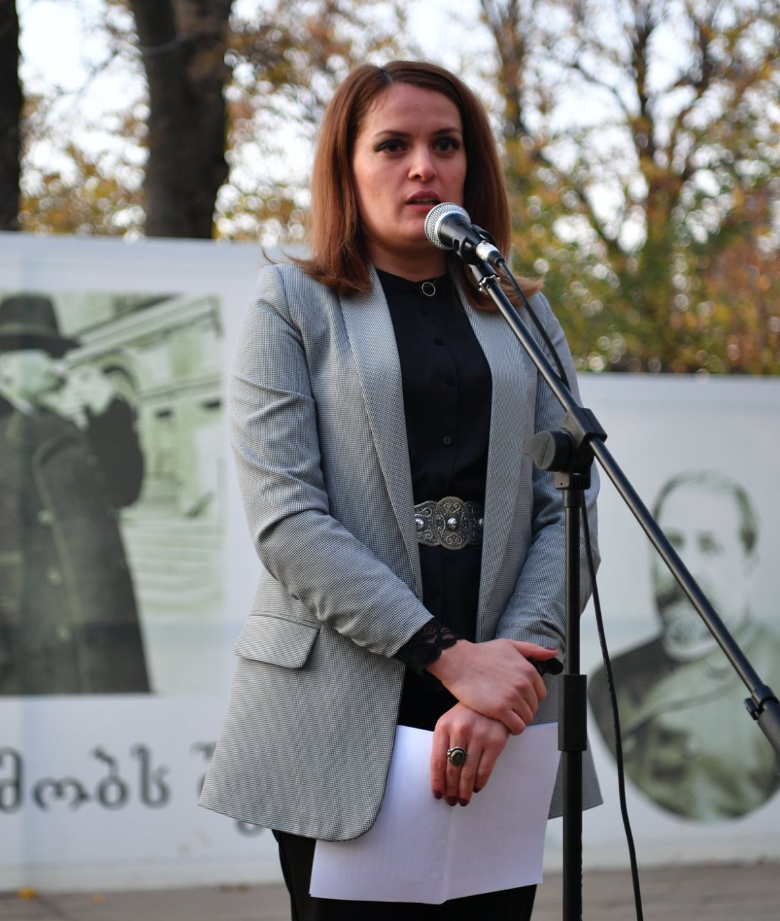
Larisa Tuptsokova-©Larisa Tuptsokova
“The preposterous case against Larisa Tuptsokova is in direct retaliation for her work promoting Circassian language and culture. The Russian authorities must end their relentless onslaught on freedom of expression and mounting acts of transnational repression, including by dropping all baseless charges against Tuptsokova.” Ma Thida, Chair of PEN International’s Writers in Prison Committee.
11 December 2025: The Russian authorities should immediately end any criminal proceedings and drop all charges against Larisa Tuptsokova, PEN International said today. The Circassian writer faces up to six years in prison in absentia on bogus ‘extremism’ grounds if convicted. PEN International reiterates calls on the Russian authorities to end their misuse of counter-extremism legislation and baseless in absentia prosecutions to silence independent voices.
Larisa Tuptsokova – an award-winning writer from the Republic of Adygea in the Russian Federation, now based in Georgia – stands accused by the Russian authorities of ‘organising the activity of an extremist community’ under Article 282.2 (Part 2) of the Criminal Code of the Russian Federation, which carries up to six years in prison. In a letter dated 9 October 2025 and later sent to her parents’ home address in Adygea, the Investigative Committee of the Russian Federation stated its intention to open a criminal case against Tuptsokova, without sharing further information. Law enforcement officials subsequently searched her parents’ home and questioned her relatives. Rosfinmonitoring, the Russian Federation’s Federal Financial Monitoring Service, included Tuptsokova in its list of ‘terrorists and extremists’ on 11 November 2025, in effect preventing her from returning to the Russian Federation.
Tuptsokova, who has been living in Georgia for the past 14 years and also holds Georgian citizenship, believes the case against her stems from her activities and publications in support of Circassian language and culture, including through the online platform Circassian Media. Tuptsokova, who notably worked for the Circassian Cultural Centre in Tbilisi before it was labelled ‘extremist’ by the Russian Federation in 2024, reported that a fake website had been set up under the Centre’s name in August 2025, with articles falsely attributed to her. Scores of activists and cultural figures from the North Caucasus Republics, Georgia, Turkey and beyond have called for the case against Tuptsokova to be dropped, stressing it would set a dangerous precedent for those who worked with the Circassian Cultural Centre, and denouncing the Russian authorities’ persecution of Circassian language and culture. Activists from the Kabardino-Balkaria Republic who signed a public appeal in support of Tuptsokova were reportedly summoned by the Kabardino-Balkarian Ministry of Internal Affairs in a bid to intimidate them.
As documented by human rights groups, the Russian authorities have intensified their misuse of anti-terrorism and anti-extremism legislation in recent years, with a view to silence all dissenting voices. Those in the Russian Federation who have been added to Rosfinmonitoring’s list of ‘terrorists and extremists’ see their bank accounts frozen and monthly spending restricted to 10,000 roubles (approximately 130 USD). The Russian authorities have further intensified their use of in absentia convictions against Russian journalists, writers and activists in exile, with a view to intimidating them, blocking their return to the Russian Federation and pressuring their relatives.
PEN International urges the Russian authorities to end their acts of transnational repression, to bring anti-terrorism and anti-extremism legislation in line with their international human rights obligations, and to drop unfounded extremism-related charges against all individuals and groups, including Tuptsokova.
Additional information
Larisa Tuptsokova is a Georgia-based writer, poet, translator, journalist, philologist, and teacher of the Circassian language. She participated in the 2023 Indigenous and Minoritised Languages Video Poems Marathon of PEN International’s Translation and Linguistic Rights Committee.
Around 800,000 Circassians currently live in the North Caucasus Republics of Adygea, Kabardino-Balkaria and Karachay-Cherkessia, where Circassian language and culture face systematic suppression by the Russian authorities.
Note to editors:
For further details contact Aurélia Dondo, Head of Europe and Central Asia Region at PEN International
For media queries contact Sabrina Tucci, Head of Communications and Campaigns at PEN International