
Syria: One year on, a transition marked by bloody repression sparks grave concern for the country’s future
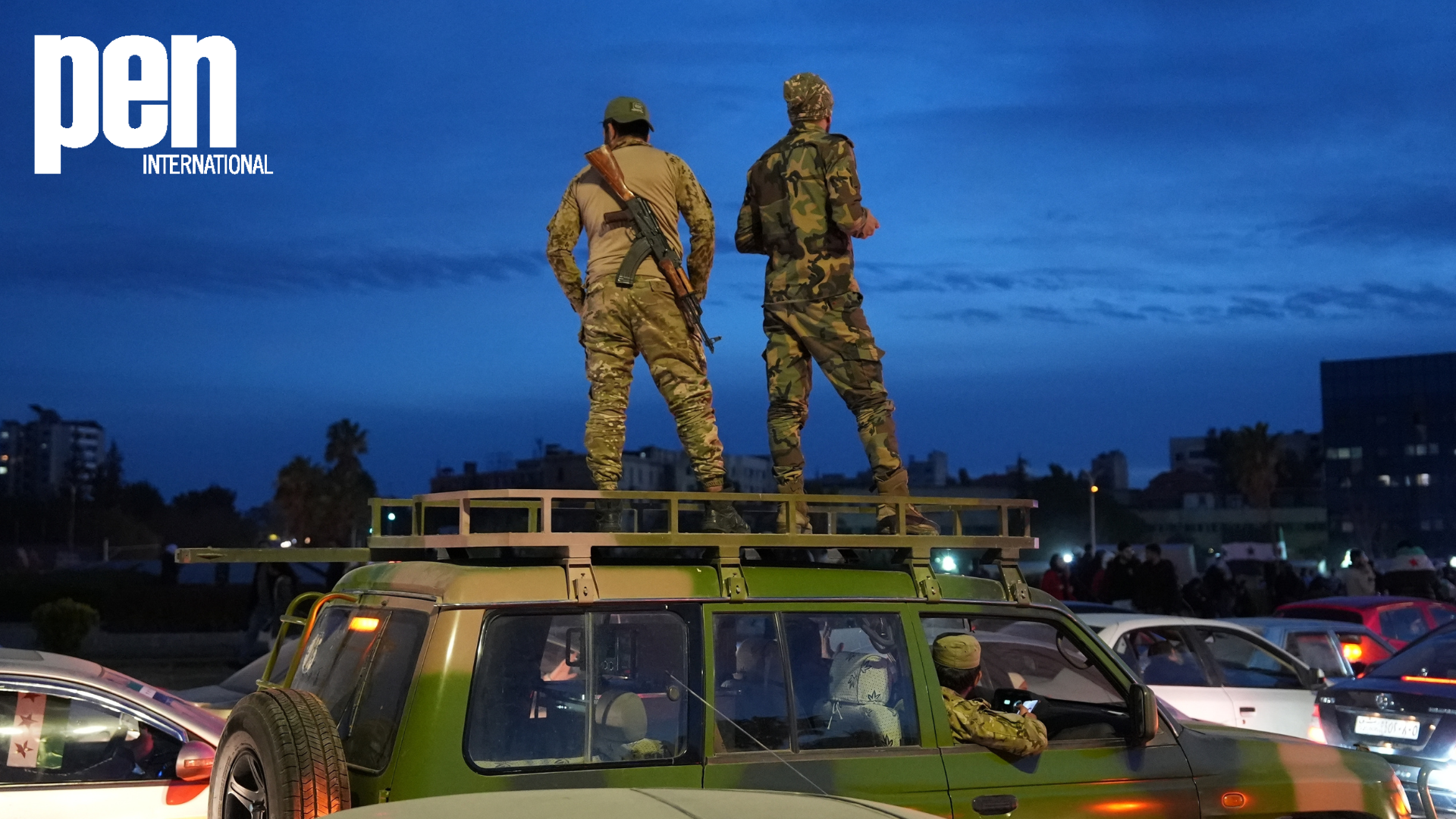
Image Credit: Mohammad Bash via Shutterstock
“PEN International stands in full solidarity with Syrian writers, journalists and others who face threats for their peaceful expression and stands shoulder to shoulder with all Syrians in their peaceful struggle for freedom and justice. Only by recognising the rights of all Syrians can it create a space for a transition to a peaceful, just, and equal Syria for all,” said Romana Cacchioli, Executive Director of PEN International.
9 February 2026: PEN International is gravely concerned about the freedom of expression environment in Syria amid the systematic persecution of minorities and entrenched impunity for perpetrators of violence throughout the first year under the transitional government. The rise of hate speech, coupled with systematic violence against religious and ethnic minorities, represents a significant barrier to all Syrians' rights to freedom of expression and to take part in cultural life.
PEN International calls on the transitional government to end impunity over grave human rights violations, including the systematic persecution of minorities, and to ensure equal rights to all Syrians, including freedom of expression and protection from hate speech, discrimination and violence. The organisation also calls for independent investigations into all acts of violence committed over the last year, and for those responsible to be held accountable in accordance with international law.
Over a year since the downfall of the al-Assad regime in December 2024, the conduct of the transitional Syrian government has raised grave concerns due to its extreme background and reports of the systematic persecution of minorities across the country. The interim Syrian President, Ahmed al-Sharaa, was under UN sanctions as the leader of the Islamist militant group Hayat Tahrir al-Sham (HTS), which was formerly linked to al-Qaeda and ISIS. In November 2025, the UN Security Council voted to lift sanctions on al-Sharaa following a resolution sponsored by the US government. In the same year, transitional government security forces and affiliated militia groups engaged in major attacks on religious and ethnic minorities across the country, committing acts that may constitute war crimes. The attacks coincide with a horrendous rise in hate speech and identity-based incitement to violence being directed against minorities, creating a suffocating environment for freedom of expression, particularly among the Alawi, Druze, and Kurdish communities. The impact on writers has been profound: many have lost their homes and personal belongings, including books and libraries, while others were forced into self-censorship, fearing for their lives. In reports to PEN International, writers who survived the attacks on the Kurdish, Druze, and Alawi communities have described horrific levels of violence committed against their families and communities. This includes accounts of the widespread kidnapping of civilians, including women, systematic looting and pillaging, destruction of property, and the extrajudicial killings of civilians, resulting in a climate of fear and polarisation that has paralysed their ability to work and creatively express themselves.
In one case, a writer reported the disappearance of two family members during the attacks on the Kurdish-majority Sheikh Maqsoud and Al-Ashrafiyah neighbourhoods of Aleppo in January 2026, accusing government-affiliated forces of kidnapping them. Later, the kidnappers contacted the family and demanded a ransom amounting to several thousand US dollars for each family member. Writers from the city of Suwayda reported widespread abductions and killings of civilians, lootings, and destruction of property during the attacks on the governorate in July 2025. In one case, a writer reported that their family members survived a knife attack only to be shot later in their home by transitional government forces and affiliated militias, who ransacked their house. Another reported that their home was completely burned down, including their library, while their family members were forced to flee their homes. A writer who survived the attacks on coastal areas in March 2025 told PEN International that they witnessed most of their neighbours being slaughtered inside their homes and in the streets due to their religious background. Their home and shop were ransacked, and their car was burned down by the interim government forces and affiliated militias.
In August 2025, a theatrical production by prominent twin stage actors, the Malas Brothers, was suspended in the coastal city of Tartus, following their criticism of the transitional government's attacks against Alawi and Druze communities on social media. Although the transitional government’s Ministry of Culture claimed the suspension was a misunderstanding and that the ministry respects artistic freedoms, the twin artists state they were censored.
Similarly, in December 2025, the renowned Syrian musician and composer Malek Jandali announced the last-minute cancellation of his Syrian Symphony for Peace tour after he was informed he would not be able to play his music at Homs city’s Clock Square, which has become a symbol of resistance against al-Assad and was intended to be a central element of the tour. Jandali had previously announced his plans to travel to Syria to celebrate the first anniversary of al-Assad's downfall through music with the Syrian public. However, just hours before his departure, he was informed that a major part of his planned tour was cancelled, with conflicting explanations given by the authorities.
Additional information
Attacks on the Kurdish-controlled areas in North-East Syria
In March 2025, the transitional Syrian government signed a deal with the Kurdish-led Syrian Democratic Forces (SDF), which controls large areas in north-east Syria, to completely end all hostilities, integrate with the government forces and handover control over their territory. The agreement also recognised the rights of the Kurdish community as a part of the Syrian state, yet it has not set guarantees or protections for their rights. Over the last year, transitional government forces and their affiliated militias have engaged in sporadic clashes with the SDF, in an attempt to take over the areas under SDF control. In July 2025, the transitional government enforced a blockade over the Kurdish-majority neighbourhoods of Sheikh Maqsoud and Al-Ashrafiyah in Aleppo city, cutting off essential supplies to the whole population in what was characterised by Syrian human rights groups as Assad regime tactics. Similarly, in December, the same neighbourhoods came under siege by government forces, resulting in major interruptions to electricity, water, and internet services.
In January 2026, clashes erupted again between the transitional government and its allied forces, and the SDF’s fighters at the Sheikh Maqsoud and Al-Ashrafiyah neighbourhoods of Aleppo, resulting in the mass displacement of tens of thousands of civilians. During the clashes, both parties accused each other of conducting attacks against civilians and civilian infrastructure, including hospitals and medical staff. Media outlets and human rights groups reported dozens of civilian casualties, attacks on civilian infrastructure, and extrajudicial killings of civilians, yet so far, no independent investigation into such grave human rights violations has been conducted.
Attacks on the Alawi minority
In August 2025, the UN’s Independent International Commission of Inquiry on the Syrian Arab Republic published its report documenting the violence perpetrated in coastal and western areas in Syria, primarily targeting the Alawi community, since January 2025. The Commission found that many acts were perpetrated by militias affiliated with the transitional government, including murder, torture and inhumane acts related to the treatment of the dead, widespread looting and burning of homes, and displacement of tens of thousands of civilians, may amount to war crimes.
The violence escalated in March 2025, as armed groups affiliated with the former al-Assad regime launched attacks on multiple military sites of the interim government in Latakia and Tartous. In response, the government and its allied militias retaliated by targeting the Alawi community in coastal areas. According to the Commission’s report, Alawi men were systematically targeted based on their religious affiliation, separated from women and children before being led outside to be shot and killed. The Commission raised concerns in August that it ‘continues to receive information about ongoing violations in many of the affected areas, including abductions of women, arbitrary arrests and enforced disappearances, as well as continued looting and occupation of property’.
A joint report by Human Rights Watch, Syrians for Truth and Justice, and Syrian Archive found that at least 1,400 people were killed as a result of the transitional government and its affiliated militias' attacks on more than 30 Alawi-majority towns, villages, and neighbourhoods. An investigation by Reuters in June 2025 documented horrific acts and identity-based killings against Alawites and established direct links between perpetrators and the current government.
Attacks on the Druze minority
The situation in Suwayda deteriorated in July 2025, when tension escalated between Druze armed groups and Bedouin tribes and their allies, leading to armed clashes. On 15 July, Syrian government forces announced their entry into Suwayda in response to these clashes, which led to further escalation. Amnesty International documented the deliberate killing of 46 Druze people by government and government-affiliated forces on 15 July and 16 July. PEN International documented testimonies of Syrian writers who confirmed that identity-based persecution, enforced displacement, and destruction of personal property have been rampant in Suwayda. Israel has also conducted airstrikes against Syrian government forces on 15 July, leading to the murder of at least 15 members of government forces.
A ceasefire agreement was reached between Druze militias, Bedouin fighters and government-affiliated militias after almost a week of clashes that killed between 800 and 900 people. On 31 July, the UN’s Office for the Coordination of Humanitarian Affairs reported the displacement of 192,000 individuals across Suweyda, Dar’a, and Rural Damascus, with the majority displaced within Suweyda. Sporadic armed incidents occurred after the ceasefire announcement, and UN reports assess that the security situation in Suwayda is still unpredictable amid a deteriorating humanitarian situation. The clashes and instability in Suweyda have disrupted the movement of people and goods, leading to shortages of essential goods, soaring prices, and affecting the provision of essential services for weeks.
Note to Editors:
For further information, please contact Mina Thabet, Head of the MENA Region at PEN International: [email protected].
For media enquiries, please contact Sabrina Tucci, Head of Communications and Campaigns at PEN International: [email protected].