Afghanistan five years on: Don’t send people back to Taliban rule
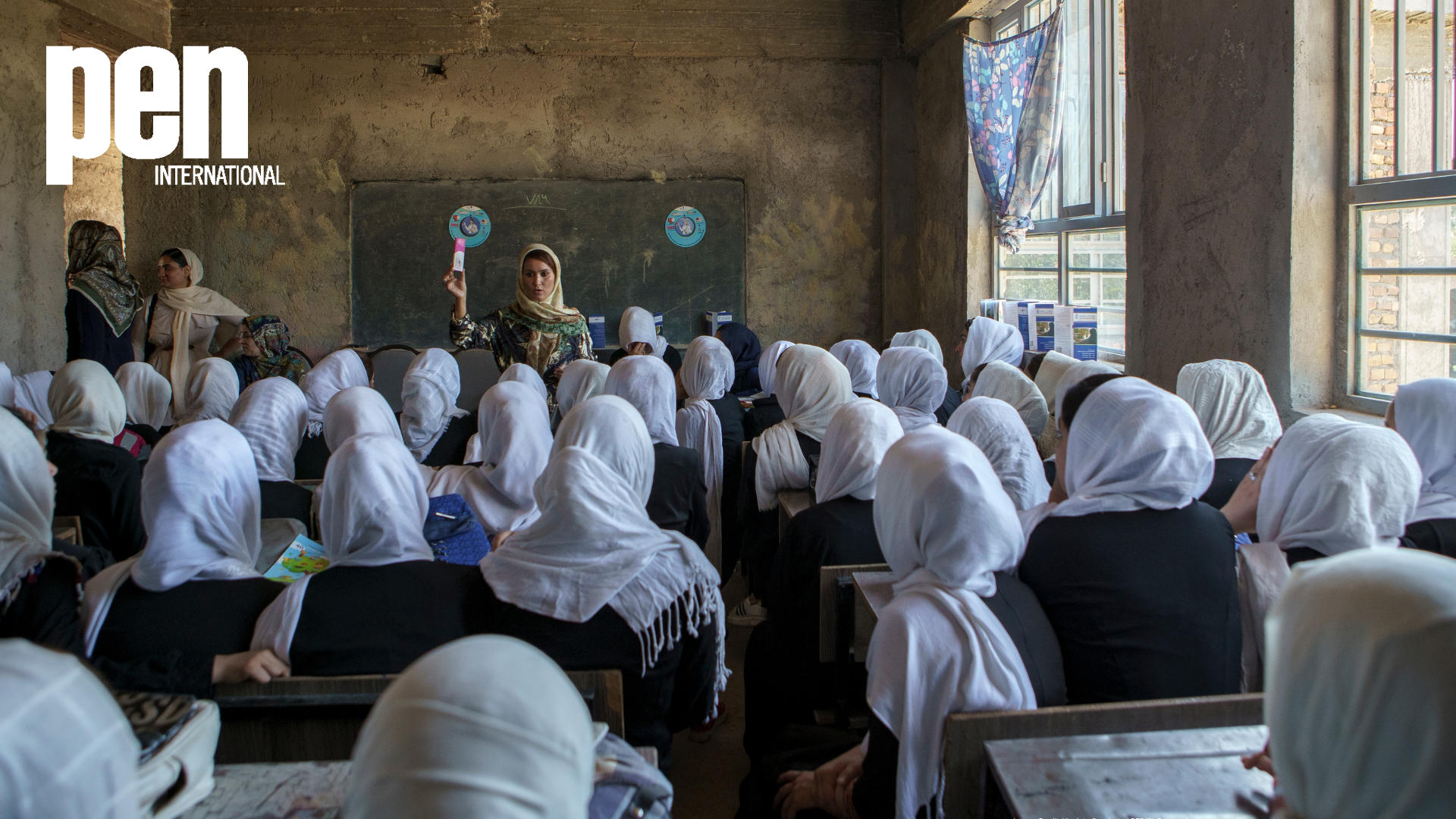
Image credit: Solmaz Daryani/ Shutterstock
15 August 2026: Five years on from the Taliban’s return to power, Afghanistan’s writers, journalists and independent voices continue to face severe repression. As European governments consider closer cooperation with the Taliban on returns, PEN International and PEN Centres are calling for an approach that puts human rights, freedom of expression and the safety of those at risk first.
António Costa
President of the European Council
Ursula von der Leyen
President of the European Commission
Roberta Metsola
President of the European Parliament
15 August 2026
Dear Mr António Costa, Ms Ursula von der Leyen, Ms Roberta Metsola, and the Heads of State of the European Union Member States, Norway, and the United Kingdom:
We, PEN International and the undersigned PEN Centres, write to express our deep concern over recent efforts by the European Union, its member states, Norway, and the United Kingdom to pursue cooperation with the Taliban on the return of Afghan nationals, as well as broader moves across Europe that risk lending legitimacy to a regime responsible for one of the world’s gravest assaults on freedom of expression.
Five years after the Taliban’s return to power, Afghanistan’s independent cultural and intellectual life has been all but extinguished. It has become one of the most dangerous places to write. Independent media outlets have been shut down, publishers and booksellers have come under sustained pressure, and many of the country’s leading literary voices have been forced into exile or silence.
The suppression of free expression has taken place alongside a wider assault on fundamental rights. Women and girls have been systematically excluded from almost every aspect of public life. UN experts have concluded that the Taliban's treatment of women and girls amounts to ‘gender apartheid’.
At the same time, Afghanistan faces an escalating humanitarian crisis. Cuts to international assistance have left millions without reliable access to food and healthcare—around one in three Afghans currently faces acute food insecurity. At the same time, renewed hostilities with Pakistan have caused further civilian casualties and displacement, exacerbating an already dire situation.
Against this backAdrop, we are increasingly concerned by policy developments across Europe that point towards closer cooperation with the Taliban on migration matters. Within the European Union, discussions have centred on establishing increased cooperation with the Taliban to facilitate the return of Afghan nationals. In the United Kingdom, media reports indicate that the government is considering the resumption of deportations to Afghanistan, including through discussions with the Taliban. Taken together, these developments signal a troubling departure from longstanding international protection commitments and indicate that relations with the Taliban will advance despite the group’s continuing abuses.
Particularly concerning were the meetings held in Brussels in June 2026 between Taliban representatives, the European Commission, and representatives of a number of member states to discuss cooperation on returns. These discussions followed calls from 19 member states and Norway urging a more coordinated European approach to returning Afghan nationals. The Taliban itself publicly celebrated the meetings as a significant diplomatic breakthrough.
We recognise that governments may, in limited circumstance, need to engage with de facto authorities in order to facilitate humanitarian assistance or pursue other essential objectives. Such engagement, however, must remain firmly anchored in the protection of human rights. It should not contribute to the political normalisation of the Taliban, nor be used to facilitate the return of people to a country where they face a credible risk of persecution for their peaceful expression.
For Afghanistan’s writers, journalists, artists, and poets, that risk is acute. Since November 2020, the Taliban have killed three PEN members—Abdullah Atefi, Dawa Khan Menapal, and Yama Siawash—and continue to imprison and persecute those who exercise their right to freedom of expression. The dismantling of independent media, the persecution of critical voices, and the near-total elimination of the civic space make clear that Afghanistan cannot be regarded as a country to which those at risk can safely return.
This assessment has been echoed by the United Nations. In May 2026, UN High Commissioner for Human Rights Volker Türk called on all states to halt involuntary returns to Afghanistan, warning that conditions in the country remain incompatible with safe return. Türk urged governments to uphold the principle of non-refoulement. We urge European governments to heed that call.
In addition, once governments begin cooperating with the Taliban on returns, that cooperation risks evolving beyond its original scope. Recent developments, such as Germany's decision to permit Taliban officials to assist with deportation arrangements, as well as reports that the United Kingdom is exploring the resumption of removals, suggest a broader shift in approach across Europe.
For Afghan writers, journalists, poets, artists, and their families, many of whom remain in exile or in precarious legal situations, these developments create profound uncertainty. Similar deportation programmes in Pakistan and Türkiye have already placed at-risk Afghan writers and journalists in danger of being returned to Taliban rule. Cooperation on returns also risks conferring legitimacy on the Taliban as a credible partner on migration management, despite its continuing persecution of writers and systematic dismantling of fundamental freedoms.
Since August 2021, PEN International, together with its Centres and partners, has helped facilitate the emergency relocation and long-term resettlement of more than 120 at-risk Afghans, comprising of writers, poets, journalists, publishers, artists, and their family members. Many had received direct threats from the Taliban because of their peaceful expression. These efforts have demonstrated what is possible when governments provide meaningful pathways to safety but also show that such protection depends upon sustained political commitment.
The European Union, its member states, Norway and the UK have long been global leaders in defending freedom of expression, supporting writers at risk, and promoting accountability for violations of international human rights law. We respectfully urge you to uphold that leadership by ensuring that migration policies do not undermine the very principles they seek to defend.
Accordingly, we call upon the European Union, its member states, the UK, and Norway to:
Reject efforts to establish cooperation with the Taliban for the purpose of facilitating the return of Afghan nationals and refrain from pursuing forced returns to Afghanistan.
Ensure that any engagement with the Taliban remains narrowly focused, conditioned upon measurable and sustained improvements in human rights, and does not contribute to the regime’s political legitimisation.
Uphold the principle of non-refoulement and ensure that all migration and asylum policies fully comply with international refugee and human rights law.
Expand safe and durable pathways to protection, including resettlement and humanitarian admission programmes, for Afghan writers, journalists, poets, and others at risk of persecution due to their peaceful expression.
Yours sincerely,
PEN International
PEN Afghanistan
Basque PEN
PEN Català
Danish PEN
English PEN
French PEN
PEN Germany
Irish PEN
PEN Norway
PEN Spain
PEN Sweden
Note to editors:
For further details, contact Michael Rosen-Lupu, Head of Asia/Pacific Region at PEN International: [email protected]
For media queries, please contact Sabrina Tucci, Head of Communications and Campaigns at PEN International: [email protected]