
China: nine years after Liu Xiaobo’s death in custody, risks for writers persist
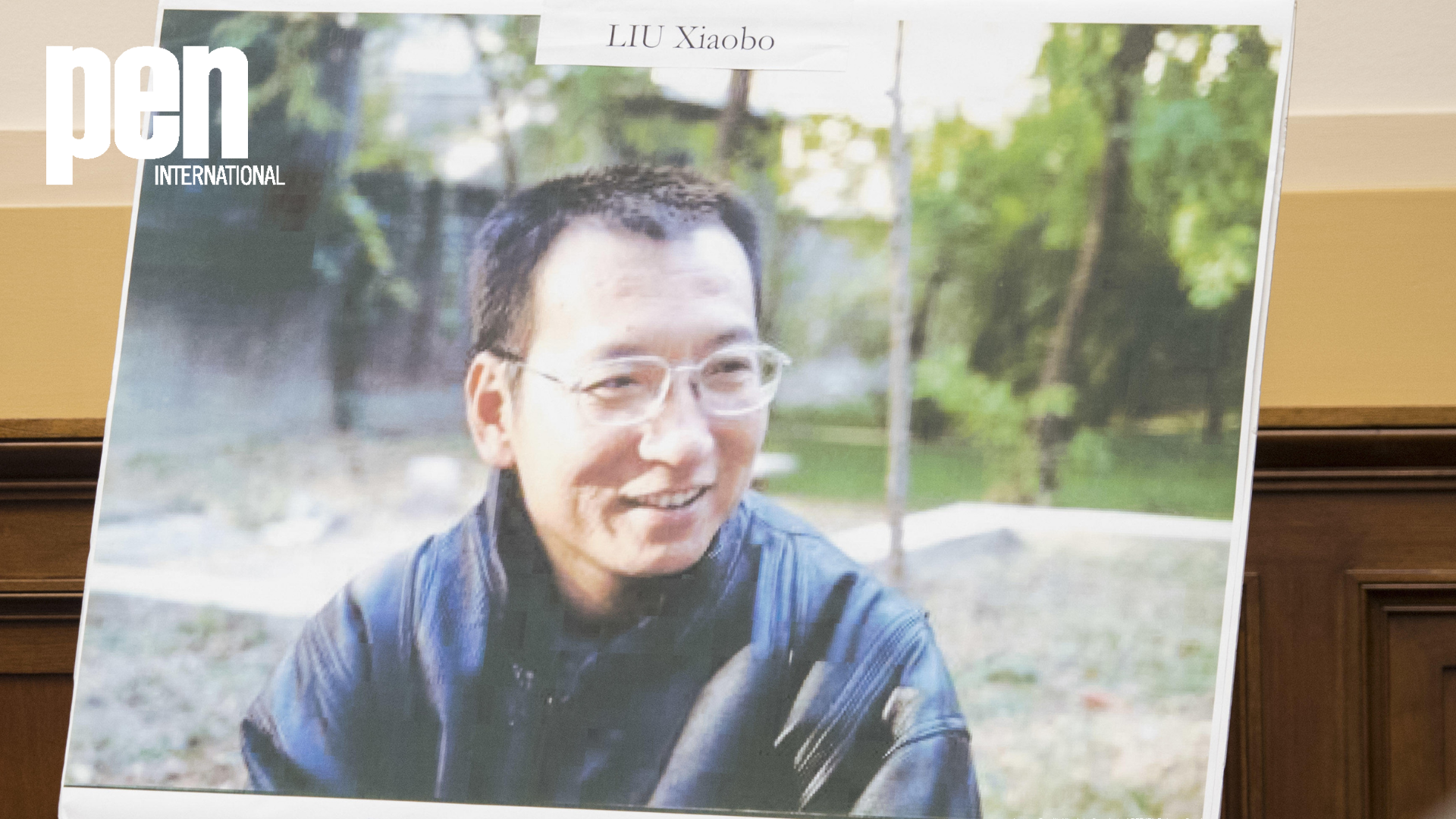
Image Credit: Kevin Dietsch/Alamy.
‘Liu Xiaobo embodied nonviolent resistance with a lifetime of hardship, sacrificing his own liberty to unveil the grim reality of a populace deprived of freedom. In his final journey toward death, what Liu Xiaobo had to confront was the callousness of the Chinese Communist Party and the numbness of the Chinese public. As we mark the ninth anniversary of his death, overcoming this callousness and indifference is the greatest tribute we, the living, can pay to his legacy and to the defence of freedom,’ said Ma Jian, President of the Independent Chinese PEN Centre.
13 July 2026: Nine years after the death in state custody of Nobel Peace Prize laureate, literary critic, writer, and former Independent Chinese PEN Center (ICPC) president Liu Xiaobo, PEN International, the ICPC, and PEN America warn that the Chinese authorities continue to imprison writers and suppress independent thought. The organisations call on the Chinese government to immediately release all writers imprisoned solely for the peaceful exercise of their right to freedom of expression.
Liu Xiaobo died on 13 July 2017 while serving an 11-year prison sentence for ‘inciting subversion of state power.’ Awarded the 2010 Nobel Peace Prize for his struggle for fundamental human rights, Liu became the first Nobel Peace Prize laureate since Carl von Ossietzky to die in state custody. Though Chinese authorities granted him medical parole for terminal liver cancer a few weeks before his death, he was kept under armed guard and was denied permission to seek medical treatment abroad.
A leading literary critic, essayist, and public intellectual, Liu Xiaobo was also one of the principal authors of Charter 08, the landmark manifesto published on Human Rights Day in 2008 calling for constitutional government, judicial independence, and greater protection of fundamental freedoms in China. The manifesto remains banned in China, and many of its signatories have faced imprisonment and persecution.
Nine years after his death, the Chinese government continues to censor Liu Xiaobo’s writings and punish those who seek to honour his memory. His name remains heavily censored online, and research has found that major Chinese AI chatbots refuse to answer questions about him.
The repression extends to those who peacefully commemorate him. In February 2026, independent writer and ICPC member Zan Aizong was sentenced to three years’ imprisonment on charges of ‘picking quarrels and provoking trouble’ after participating in a peaceful memorial marking the seventh anniversary of Liu Xiaobo’s death in July 2024. This vaguely defined offence is routinely used by the Chinese authorities to criminalise peaceful expression.
‘The imprisonment of Zan Aizong for peacefully commemorating the life of Liu Xiaobo underscores China's continued use of vague criminal charges to silence independent writers and erase collective memory. No one should be jailed for a peaceful act of remembrance,’ said Ma Thida, Chair of PEN International's Writers in Prison Committee.
Other writers connected to Liu Xiaobo’s legacy also remain imprisoned. Zhang Guiqi, a signatory of Charter 08 and member of ICPC who joined the organisation following Liu Xiaobo’s death, continues to serve a six-year prison sentence.
Liu Xiaobo’s case remains emblematic of the dangers faced by writers in China today. Long prison sentences continue to be imposed on writers and publishers solely for their expression. Among those currently imprisoned are:
Yang Hengjun, writer, scholar, and political commentator with Australian citizenship, who remains imprisoned under a suspended death sentence with reprieve.
Gui Minhai, Hong Kong-Swedish poet, author, publisher, bookseller and ICPC member, serving a ten-year prison sentence after he was abducted from Thailand in 2015.
Ethnic minority writers remain particularly vulnerable to severe punishment. Those currently imprisoned include:
Professor Ilham Tohti, Uyghur writer, academic and public intellectual, and co-founder of bilingual website Uyghur Online, serving a life sentence.
Professor Rahile Dawut, internationally renowned anthropologist and expert on Uyghur folklore, who remains in incommunicado detention while reportedly serving a life sentence.
Yalqun Rozi, Uyghur writer, journalist, editor, and literary critic, serving a 15-year prison sentence.
Go Sherab Gyatso, prominent Tibetan writer, educator and public intellectual serving a 10-year sentence.
Writers in detention are also routinely denied adequate medical care. Dong Yuyu, a writer and journalist serving a seven-year sentence, has reportedly experienced a significant deterioration of his health while in prison, and should be granted medical parole without delay.
Finally, the Chinese authorities continue to target family members and loved ones of imprisoned writers. Liu Xia, Liu Xiaobo’s widow, spent years under unofficial house arrest before finally being permitted to leave China in 2018. More recently, human rights lawyer and honorary ICPC member Yu Wenshengand his family have reportedly been prevented from leaving China.
Despite the Chinese government’s best efforts to erase his memory, Liu Xiaobo’s writings and ideals continue to inspire writers, readers, and human rights defenders around the world.
‘It is alarming that the Chinese government seems entirely unconcerned by the death of Liu Xiaobo who died in state custody nine years ago. In fact, since then the government’s crackdown on writers has only intensified,”. “This lack of concern and remorse for the Chinese government and their doubling down on the appalling treatment of writers means that global solidarity is the only thing that can help to make life safer for writers in China,’ said Erika Nguyen, Senior Manager at PEN America’s PEN/Barbey Freedom to Write Center.
PEN International, the Independent Chinese PEN Center, and PEN America call on:
The Chinese government to immediately and unconditionally release all writers who remain imprisoned for their expression; ensure they have regular access to their families, lawyers and independent medical care; and end the use of vague criminal offences to silence peaceful expression.
Governments worldwide to continue raising the cases of imprisoned writers in all diplomatic engagements with China.
Readers, writers, and publishers to continue reading, sharing, and amplifying the works and stories of writers imprisoned in China, ensuring that efforts by the government to erase their voices do not succeed.
Note to editors:
For further details, contact Michael Rosen-Lupu, Head of Asia/Pacific Region at PEN International: [email protected]
For media queries, please contact Sabrina Tucci, Head of Communications and Campaigns at PEN International: [email protected]