
Georgia: Ruling by the European Court of Human Rights on journalistic protections in the context of protest sets important precedent
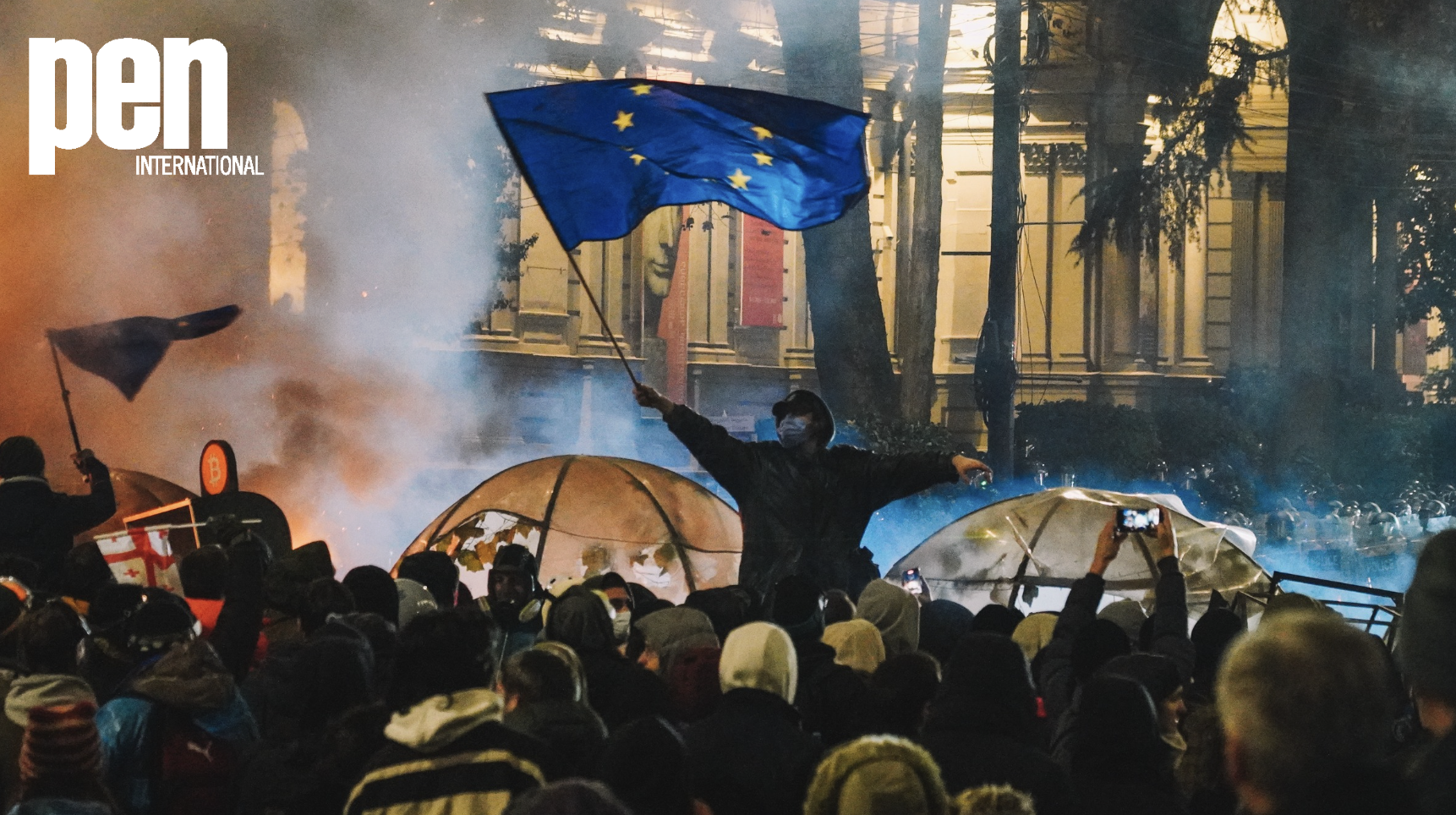
17 December 2025 – PEN International, PEN Georgia and English PEN welcome the European Court of Human Rights’ (ECtHR) judgment in the case of Tsaava and Others v. Georgia handed down on 11 December 2025. The judgment reaffirmed the existence of a positive obligation on Contracting States to have effective systems for protecting journalists covering protests and set an important precedent regarding the dispersal of demonstrations using rubber bullets (‘kinetic impact projectiles’).
In February 2025, PEN International, English PEN, and PEN Georgia filed a third-party intervention in the case of Tsaava and Others v. Georgia regarding the allegedly excessive use of force by police in Georgia during the dispersal of a demonstration in front of the Parliament building in Tbilisi on the night of 20-21 June 2019 and the contention that no effective criminal investigation was carried out. The organisations were represented before the Grand Chamber by barristers Prof. Can Yeginsu and Dr. Naomi Hart. The judgment is significant for its articulation of State obligations concerning the policing of protests and the protection of journalists.
The ECtHR held that an unjustified degree of force had been used by police against participants and journalists reporting on the protest. The Court ruled on the violation of the applicants’ rights under Article 3 (prohibition of inhuman or degrading treatment/lack of effective investigation), Article 10 (freedom of expression) and Article 11 (freedom of assembly and association) of the European Convention on Human Rights, awarding pecuniary and non-pecuniary damage.
Citing PEN International, PEN Georgia, and English PEN’s written submission, the Court emphasised the positive obligation of Contracting States under Article 10 to have in place an effective system of protection of journalists during protests in their role as ‘public watchdogs’, and that interference is not ‘necessary in a democratic society’. The Court further found that the use of force by firing kinetic impact projectiles against the applicant journalists and removing an applicant journalist from the Parliament building’s courtyard were neither justified nor proportionate.
The ECtHR also found that the criminal investigation – still ongoing for more than five and a half years – into injuries sustained by the applicants from the firing of kinetic impact projectiles and physical ill‑treatment by police was ineffective. Although there might have been some justification for wanting to disperse the demonstration, the Court considered that the way in which the dispersal had taken place was not justified. Above all, the Court found that an unjustified degree of force had been used by police, causing the applicants and others physical injury. Crucially, the judgment set landmark minimum requirements for the regulation of kinetic impact projectiles in police crowd management operations to minimise the risks of death and injury stemming from their use.
The Grand Chamber’s judgment in the case of Tsaava and Others v. Georgia comes against the backdrop of an alarming human rights crisis in Georgia, where the authorities continue to crack down on fundamental freedoms at an alarming speed. The safety of writers, journalists and artists remains a grave concern, with inefficient investigations into mounting cases of threats and attacks, including by law enforcement officials. Government intimidation, harassment, and interference in the work of critical voices in the cultural sphere continue unabated.
PEN International, PEN Georgia and English PEN reiterate calls on the Georgian authorities to abide by their national and international obligations and to fully uphold the rights to freedom of expression, association and peaceful assembly. All those responsible for human rights violations must be held to account.
Note to editors:
For further details, contact:
PEN International: Aurélia Dondo, Head of Europe and Central Asia: [email protected]
PEN Georgia: Khatuna Tskhadadze, President: [email protected]
English PEN: Cat Lucas, Head of Campaigns: [email protected]