Mexico: PEN International calls on Mexican authorities to guarantee editorial freedom and freedom of expression
‘An investigation in the public interest cannot be made subject to the authorisation of the individuals named in it. Preventing victims of a crime from documenting their experiences and naming those who feature in their testimonies threatens freedom of expression and society’s right to be informed,” said Romana Cacchioli, Executive Director of PEN International.
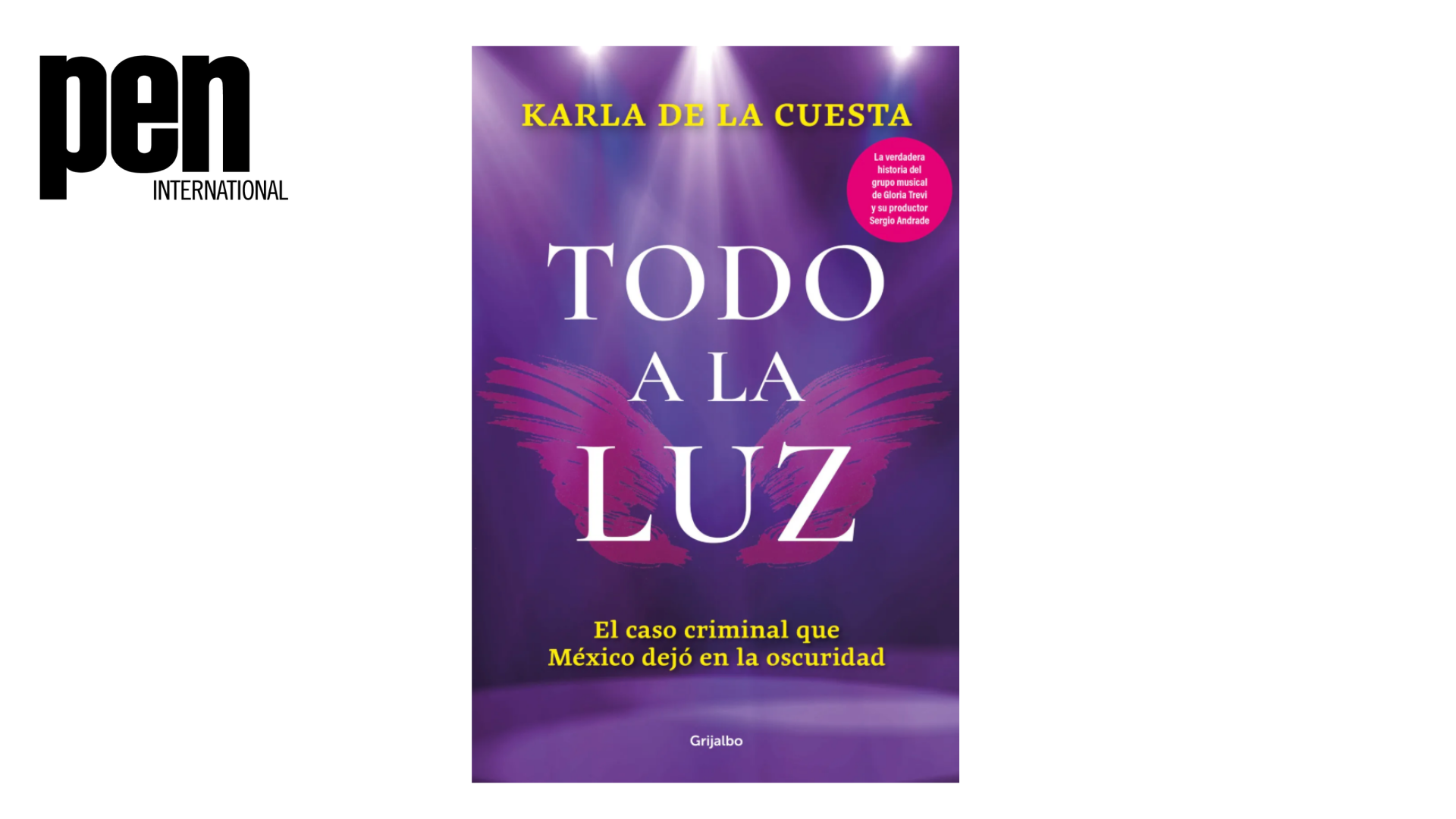
PEN International expresses its deep concern over the ruling issued by the Mexican Institute of Industrial Property (IMPI) concerning writer and activist Karla de la Cuesta’s 2024 book Todo a la luz (Everything in the Light) and calls for the lifting of restrictions that are incompatible with freedom of expression. Using state institutions to prevent the circulation of a book documenting matters of public interest undermines editorial freedom and society’s right to access information.
Todo a la luz is an investigative true crime book that brings together court documents and testimonies concerning alleged cases of sexual and labour exploitation. According to information gathered by PEN International, approximately a third of the book’s content consists of testimonies from victims involved in the criminal proceedings examined in the book. Their voices constitute a legitimate contribution to public debate on crimes such as human trafficking, the protection of girls and adolescents, and access to justice.
On 27 July 2026, IMPI issued a ruling restricting the use of the name and image of one of the individuals cited in the book, imposing a fine on the book’s publisher, Penguin Random House Grupo Editorial, and warning of additional sanctions should distribution of the book continue, as well as restrictions on mentioning names in future books or publications.
The Mexican Constitution protects the right to seek, receive and impart information and ideas, as well as the freedom to publish through any medium, and prohibits prior censorship and indirect restrictions on these freedoms. Within this framework, journalists, writers and researchers have the right to investigate, document, collect victims’ testimonies and publish their findings in books or through other media, including identifying individuals connected to matters of public interest, while respecting the rights of others.
The exercise of these rights cannot, generally, be made conditional upon the authorisation of those mentioned. Reporting on judicial proceedings and examining their development and outcomes form part of legitimate public scrutiny of the administration of justice.
Article 74 of the Regulations of Mexico’s Federal Copyright Law establishes that the use of a person’s image without their authorisation does not constitute an infringement in commercial matters when carried out for informational or journalistic purposes or in the exercise of freedom of expression.
Information received by PEN International, stemming from the Fifth International Summit Against Human Trafficking, held in Washington in July 2026, refers to more than ten legal proceedings related to the book and the testimonies it contains. This multiplicity of legal actions raises concerns about the possible use of strategic lawsuits against public participation (SLAPPs) to silence testimonies and obstruct investigations.
PEN International considers that making informational references conditional upon prior authorisation constitutes a form of prior censorship and sets a dangerous precedent for editorial freedom. Such measures can also have a chilling and intimidating effect on publishers and media outlets.
In Mexico, one of the deadliest countries in which to practise journalism, where journalists face threats and judicial harassment, institutions must protect public debate, the right to freedom of expression and access to information.
PEN International calls on the Mexican authorities, and specifically the IMPI, to guarantee freedom of expression, information and publication, and urges the Federal Administrative Court to fully consider these guarantees, maintain protections allowing the book to remain in circulation, and annul any sanctions and restrictions that infringe upon them.
Note to Editors
For more information, please contact Alicia Quiñones, Head of the Americas Region, PEN International: [email protected]
For media queries, please contact Sabrina Tucci, Head of Communications and Campaigns, PEN International: [email protected]