PEN International’s resolutions on AI, writers’ rights and the accelerating consequences of international disorder
5 October 2026: At its 92nd Congress, held online on 29–30 September 2026, the Assembly of Delegates of PEN International adopted two resolutions addressing some of today’s most pressing challenges: the impact of Generative and Agentic Artificial Intelligence (AI) on writers’ rights, human authorship and freedom of expression; and the accelerating consequences of international disorder, including conflict, the erosion of multilateral norms, humanitarian crises and the collapse of nuclear arms control. Together, the two resolutions reaffirm PEN International’s commitment to defending the freedom to write, think and speak — and to ensuring that technological transformation and global upheaval do not come at the expense of human rights, human creativity, accountability and peace.
“Writers have always known that words shape how we see the world. In times of upheaval and uncertainty, our duty is to question the stories we're told, bear witness to what is happening, and guard the space where thought can roam free. Whether we deal with the development of new technologies or the collapse of international norms, we must keep raising our voices to protect what makes us human.” Burhan Sonmez, PEN International President
Resolution on Generative AI and Writers’ Rights
The resolution reaffirms the PEN Charter’s principle of the free and unhampered transmission of thought, while recognising both the opportunities and risks associated with Generative and Agentic AI. It expresses concern that the rapid dissemination of machine-generated content without meaningful human supervision could erode trust, weaken human authorship and accountability, distort public discourse and spread falsehoods at unprecedented speed and scale.
The resolution places human authorship at the heart of literature and creative expression. While recognising that AI can assist with research and other aspects of the creative process, it stresses that writing is a human exploration of ideas, experiences and possibilities, and that authorship derives its meaning not only from the work produced but from the human act of creating it.
It identifies seven areas of concern, including the use of copyrighted works to train AI models without consent, compensation or attribution; the exploitation of translators’ work; the amplification of disinformation and discrimination; the use of AI for censorship and surveillance; the concentration of power over what is written, translated, distributed and read; and the marginalisation of under-resourced languages and literary traditions.
The resolution calls on governments to establish rights-based regulatory frameworks; international organisations to promote global standards based on human rights, intellectual property, cultural diversity and intellectual freedom; and publishers, broadcasters and digital platforms to maintain clear standards for AI use, human supervision and editorial accountability.
It also calls on technology companies to clearly label AI-generated content; obtain consent for copyrighted works used in training data; disclose sources; support the equitable inclusion of under-resourced languages in AI systems; and ensure that AI-driven recommendation and distribution systems do not privilege artificial content at the expense of independent journalism, literature and human creative expression.
PEN Centres and civil society are urged to monitor the impact of AI on writers, journalists, translators and cultural actors, and to advocate for policies consistent with the PEN Charter.
Resolution on the Accelerating Consequences of International Disorder – An international rules-based order in free fall
The resolution warns that the consequences of international disorder have continued to inflict a devastating toll on millions, with protracted conflicts, new waves of war and instability, the erosion of multilateral norms and the abandonment of commitments to address climate change compounding existing crises. It acknowledges that the international rules-based order has never functioned equally for all peoples, while stressing that its accelerating erosion is worsening conditions for people across the world.
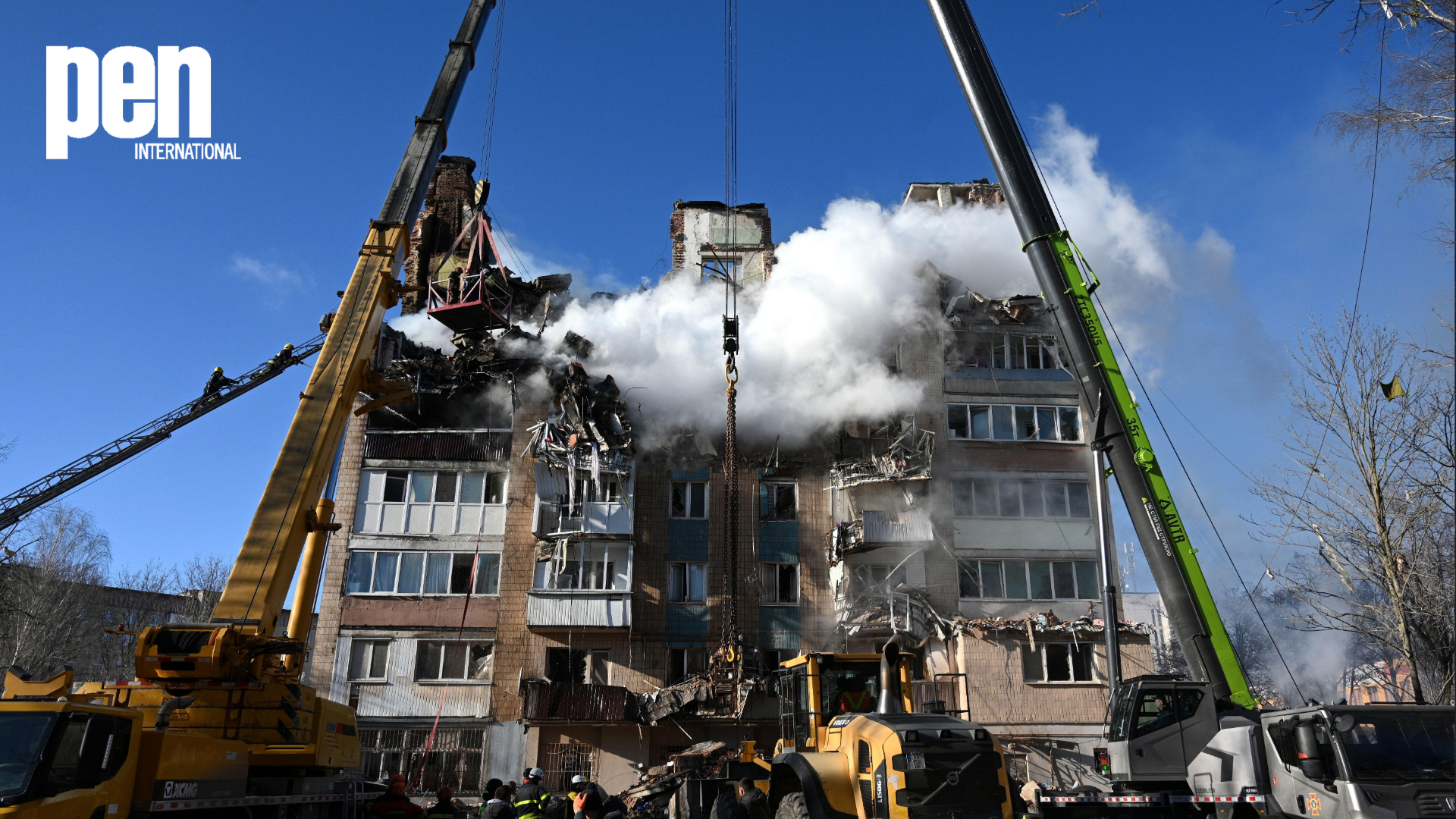
The resolution highlights the unlawful use of military force and blockades without accountability; the collapse of humanitarian assistance and its impact on vulnerable communities and independent media; attacks on civilian infrastructure and cultural heritage; and the collapse of nuclear arms control. It emphasises that these are interconnected symptoms of an international order in deepening crisis.
It calls on PEN Centres and writers to hold governments accountable for their human rights commitments, use storytelling to foster empathy and dialogue, challenge narratives that turn fear and uncertainty into aggression and hatred, and amplify the voices of people whose suffering is made invisible by political impunity and the erosion of international accountability. It also calls on governments and intergovernmental organisations to reaffirm the United Nations Charter and international law, urgently resume multilateral negotiations on nuclear arms control, support the United Nations and its agencies, and reform humanitarian assistance to reinforce the agency and leadership of affected communities and countries.
Note to Editors:
For more information and media queries, please contact Sabrina Tucci, PEN International Head of Communications and Campaigns: [email protected]