Zambia: PEN International joins the IFEX network to condemn the Zambian government’s cancellation of RightsCon 2026
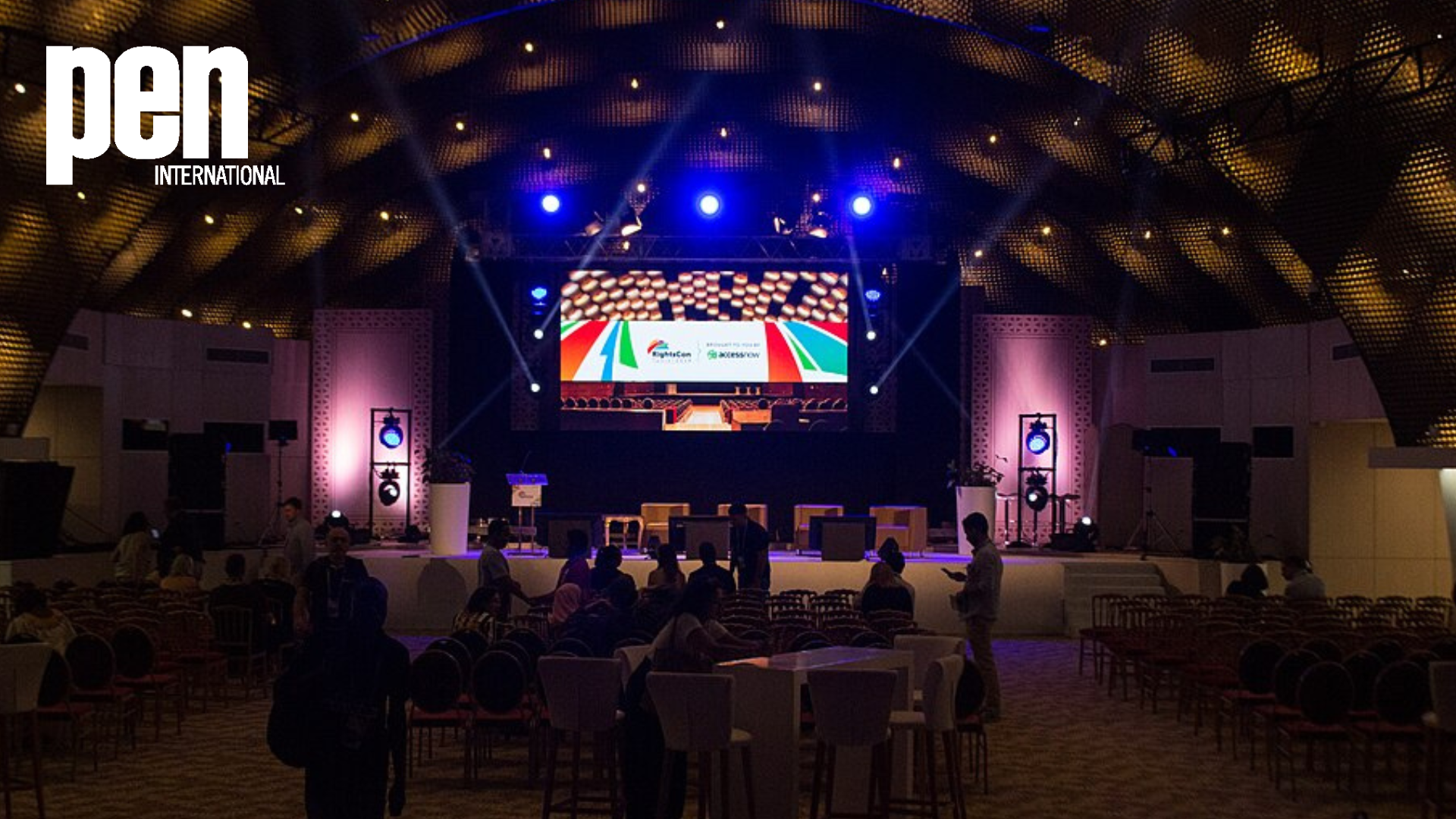
Image Credit: Brahim Guedich/WikkiCommons
8 May 2026 - PEN International joins over 100 organisations in condemning the Zambian government's last-minute cancellation of RightsCon 2026, following pressure from China over the participation of Taiwanese delegates. The world's leading summit on human rights in the digital age had been due to take place in Lusaka from 5–8 May, and its cancellation also forced the severe downscaling of UNESCO's World Press Freedom Day conference on 4 May. The cancellation is a blow to civil society, free expression, and the right to assembly everywhere.
Members and partners of IFEX and the Global Forum for Media Development stress that cancelling RightsCon and thereby seriously disrupting UNESCO's World Press Freedom Day conference weakens an already strained ecosystem and contributes to fragmentation, isolation, and, ultimately, a chilling effect on collective action.
We, undersigned members and partners of the Global Forum for Media Development and IFEX, strongly condemn the Zambian government’s decision to force the last-minute cancellation of RightsCon 2026 due to the foreign interference of China over the participation of Taiwanese delegates. The world’s leading summit on human rights in the digital age was due to take place from 5 – 8 May in Lusaka.
Shutting down an international civil society forum through its invocation of prior restraint on content of the programme and citing the need for alignment with “national values, policy priorities, and broader public-interest considerations” represents a serious and unacceptable violation of universal human rights standards including freedom of assembly, press freedom, independent journalism, and open civic space which are protected by Articles 19 and 21 of the International Covenant on Civil and Political Rights.
That pressure from China influenced Zambia’s decision further demonstrates the scale and severity of threats facing the civic space environment from foreign interference. No government should have the power to compromise such convenings.
Although this is an extremely serious attack on human rights, it is not isolated. These developments take place in an already challenging context of shrinking liberties and funding for journalism, digital rights, and free expression communities worldwide.
Effectively cancelling RightsCon and thereby seriously disrupting UNESCO’s World Press Freedom Day conference on 4 May weakens an already strained ecosystem and contributes to fragmentation, isolation, and, ultimately, a chilling effect on collective action.
Multistakeholderism must be protected in practice, not just proclaimed in principle
Members of international platforms such as the Media Freedom Coalition and Freedom Online Coalition must continue to use their convening power to ensure the participation of civil society in global forums and take concrete action against restrictions on civic space and freedom of expression.
For future regional and international fora, the demands of journalism, digital rights, and free expression communities for the physical, digital, and legal conditions for safe and open convening must be met by the UN, other inter-governmental organisations and States.
Restoring the legacy of the Windhoek Declaration
Zambia’s decision is symbolically significant because of its proximity to Namibia, where in 1991 the signing of the Windhoek Declaration led directly to the UN declaring 3 May as World Press Freedom Day two years later.
Promoting independent, pluralistic, and free media, it urges governments to protect journalists and avoid media control. Its renewal in 2021 reaffirmed a regional and international commitment to media freedom, independence, and safety.
That legacy underscores what is threatened today. These challenges remind us of the need for media to remain agile and innovative, and to uphold functional independence from any one specific actor.
Safeguarding the future of World Press Freedom Day and of the broader ecosystems it engenders requires renewed collective commitment to solidarity, accountability, and the protection of civic space.
We stand with our colleagues in Zambia and across Southern Africa
We express our solidarity with the almost 3,000 journalists, digital rights defenders, press freedom and media support and civil society actors in Zambia, across Africa, and globally who have been directly affected by the last-minute cancellation of RightsCon 2026 and the subsequent drastic downscaling of UNESCO’s World Press Freedom Day conference in Lusaka on 4 May.
We also express our strong support and solidarity with AccessNow, the organisers of RightsCon, as well as all their partners who had planned side events to further their vital work.
Above all, we stand with our colleagues in Zambia and across Southern Africa who continue to work indefatigably under increasingly constrained conditions.
“Having previously announced that Zambia’s Ministry of Technology and Science would be the primary Government partner for RightsCon 2026, the Zambian government announced the “postponement” of RightsCon on Wednesday, 29th April, just days before the conference was due to begin on 5th May.
Later the same day, the organisers of RightsCon AccessNow confirmed that RightsCon would not proceed in Zambia or online.
On Thursday, 30th April, UNESCO announced that the programme of the World Press Freedom Day in-person conference, entitled “Shaping a Future of Peace”, which has been scheduled to take place at the same venue as RightsCon, would take place “primarily online with an event also organised in Lusaka on 4 May”.
About this statement
The statement was drafted by the members and communities of the Global Forum for Media Development and IFEX.
The Global Forum for Media Development (GFMD) is the largest global community for media development, media freedom, and journalism support. Through collaboration, coordination, and collective action, our network of 224 member organisations — as well as our dozens of partners— creates, promotes, and delivers policies and programmes to sustain journalism as a public good.
IFEX is a nexus for free expression expertise contributed by over 100 member organisations, spanning 70 countries, and committed to collaboration and transformative advocacy.
Signatories
Organisations
1. 7amleh – The Arab Center for the Advancement of Social Media
2. Accountability Lab
3. ACOS Alliance
4. African Women in Media
5. Alhudood
6. Alliance of Independent Journalists (AJI) Indonesia
7. Asosiasi Media Siber Indonesia (AMSI)
8. Arab Reporters for Investigative Journalism (ARIJ)
9. ARTICLE 19
10. Association for Freedom of Thought and Expression (AFTE).
11. Association for International Broadcasting (AIB)
12. Balkan Investigative Reporting Network (BIRN)
13. Cambodian Center for Human Rights (CCHR)
14. Cartoonists Rights
15. Catholic Media Council (CAMECO) e.V
16. Centre for Independent Journalism (CIJ) Malaysia
17. Centre for Journalism and Democracy
18. Centre for Law and Democracy
19. Centre for Media and Society (CEMESO)
20. Center for Media Freedom and Responsibility (CMFR)
21. Center for Sustainable Media (CSM)
22. Centro de Archivos y Acceso a la Información (Cainfo)
23. Child Rights International Network (CRIN)
24. Critical infrastructure lab – University of Amsterdam
25. Daily Humanity Foundation
26. Daily Nawa-I-Ahmedpur Sharqia Pakistan
27. DW Akademie
28. Eastern Africa Editors Society (EAES)
29. Espacio Público
30. Ethical Journalism Network
31. Factjaja
32. Febrayer Network
33. FlokiNET ehf
34. Fojo Media Institute
35. Fondation Hirondelle – Media for peace and human dignity
36. Fundación para la Libertad de Prensa (FLIP, Colombia)
37. Freedom Forum, Nepal
38. Freedom of Expression (FXI)
39. Gambia Press Union (GPU)
40. Gisa Group | 3ayin
41. Global Forum for Media Development (GFMD)
42. Global Investigative Journalism Network (GIJN)
43. Global Voices
44. Global Youth & News Media
45. GoodBot Society
46. Gulf Centre for Human Rights (GCHR)
47. Hungarian Civil Liberties Union
48. I’lam – Arab Center for Media Freedom Development and Research
49. IFEX
50. IFoX/Initiative for Freedom of Expression-Turkey
51. Institut Panos-Haiti
52. Institute for Regional Media and Information (IRMI)
53. International Association of Women in Radio and Television -(IAWRT-Kenya)
54. International Federation of Journalists (IFJ)
55. International Federation for Library Associations and Institutions (IFLA)
56. International Press Centre (IPC)
57. International Service for Human Rights (ISHR)
58. Internews Europe
59. Institute of Mass Information (IMI)
60. International Media Support
61. Instituto Prensa y Sociedad – IPYS, Perú
62. JASS – Just Associates
63. Journalismfund Europe
64. JUMMAR
65. Lviv Media Forum
66. Media Action Nepal
67. Media Development Center (Tunisia)
68. Media Diversity Institute
69. Media Diversity Institute Global
70. Media Leadership Think Tank, GIBS
71. Media Policy Institute (MPI) Kyrgyzstan
72. Media Rights Agenda (MRA)
73. Media Self Regulation Council of Zambia
74. Media Voice
75. Momentum – Journalism and Tech Task Force
76. Moxii Africa
77. Muwatin Media Network
78. National Union of Journalists of Ukraine
79. NMT Media Foundation
80. Palestinian Center for Development and Media Freedoms (MADA)
81. Paradigm Initiative (PIN)
82. PEN America
83. PEN International
84. Penn Center on Media, Technology, and Democracy (Penn MEDIATED)
85. Press Club Belarus
86. Protection International (PI)
87. Pulitzer Center
88. Public Media Alliance (PMA)
89. Raseef22
90. Reporters Without Borders (RSF)
91. RNW Media
92. ROZANA MEDIA
93. Samir Kassir Foundation (SKF)
94. S.A.F.E. Narratives – Secure Action for Freedom of Expression
95. SembraMedia
96. Software Freedom Law Center India (SFLC.IN)
97. Syrian Center for Media and Freedom of Expression (SCM)
98. Tech4Peace Iraq
99. The African Editors Forum (TAEF)
100. The Transparency, Accountability & Participation (TAP) Network
101. Turkey recap
102. Wattan Media Network, Palestine
103. World Association for Christian Communication (WACC)
104. World Association of News Publishers (WAN-IFRA)
105. Zambia Free Press Initiative
Individuals
Angie Drobnic Holan, director, International Fact-Checking Network (IFCN)
Joan Chirwa, Zambian journalist and lawyer
Ledja Canaj, Maison Culturelle Belgo-Albanaise (ShqipVille),Civil Society & Integration Platform, Brussels
Natalia Viana, executive director, Agencia Publica, Brazil
Nozha Ben Mohamed, Radio 6, Tunisia
Rashweat Mukundu, Zimbabwean Journalist and free expression activist
Sandro Mattioli, freelance journalist covering Italian organised crime
Mohamed ElGohary, Digital Rights Expert and Human Rights Defender
Note to Editors:
For further information, please contact, Nduko o’Matigere Head of the Africa Region at PEN International: [email protected]
For media enquiries, please contact Sabrina Tucci, Head of Communications and Campaigns at PEN International: [email protected]